
Rebates & Policy
Australia’s energy transition in 2026: where it’s actually up to
Strip out the politics and read the grid operator’s own data, and the picture is unambiguous: the energy transition stopped being a forecast and became a quarterly report.
Published 24 September 2026 · Facts last verified 24 September 2026
Key points
- In the December 2025 quarter, renewables and storage supplied more than half of the National Electricity Market’s energy for a full quarter for the first time.
- Rooftop solar hit a record quarterly average of 4,407 MW, while coal generation fell to an all-time quarterly low.
- For Victorian households, the energy transition moves the value of solar into the evening: exports earn little, while stored energy saves the full retail rate.
The Australian Energy Market Operator publishes the numbers every quarter. The most recent full report — for the December 2025 quarter — contains a first that is worth pausing on.

The milestone: more than half, for a whole quarter
In Q4 2025, renewables and storage supplied more than half of the National Electricity Market’s energy for a full quarter — the first time that has happened. Not for an afternoon, not on one sunny Sunday: across three months, day and night, most of eastern Australia’s electricity came from renewable generation and storage.
The numbers behind it
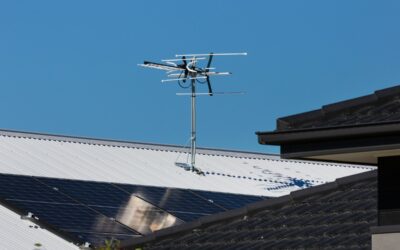
- Rooftop solar hit an all-time quarterly high — an average of 4,407 MW across the quarter, up 8.7% year on year. The biggest power station in the country is, collectively, its rooftops.
- Coal generation fell to an all-time quarterly low, down 4.6% year on year, and gas generation dropped 27% to its lowest level since the year 2000.
- Batteries changed role. Average battery discharge nearly tripled to 268 MW, with almost 3,800 MW of new battery capacity added since late 2024.
- Wholesale prices averaged $50/MWh, down 44% on the same quarter a year earlier — abundant midday generation is cheap generation.
- Minimum demand records fell everywhere. Victoria’s grid demand fell to a record-low 1,287 MW, and South Australia’s went negative — for a period, its rooftops powered the entire state and exported the surplus.
What is doing the heavy lifting in the energy transition
CSIRO’s GenCost analysis has reached the same conclusion for several years running: solar and wind, even after paying for the transmission and firming they need, are the cheapest new-build electricity available in Australia. That is why the pipeline keeps filling regardless of who is in government — the economics settled the argument before the politics did.
What it means for a Victorian household
Three practical consequences. First, middays are now so generation-rich that exported solar earns very little — Victoria no longer sets a minimum feed-in tariff at all. Second, the value has moved to the evening: storing your own surplus and using it at 7pm is where a system earns its keep, which is why the battery question looks different in 2026 than it did five years ago. Third, the same shift is why battery support programs exist at all — a grid full of solar needs storage everywhere, including behind four million meters.
Households are not spectators to the energy transition. Rooftop solar set the record quarter; home batteries are the fastest-growing tool for the evening peak. The grid’s problem and your power bill have the same solution.
Sources: AEMO — Quarterly Energy Dynamics, Q4 2025 · CSIRO — GenCost
Every figure on this page is checked against its primary source before publication. If a program or market figure changes, this page is updated and the verification date above moves with it.
Be part of the storage build-out
Take two minutes with the eligibility check and our team will tell you which solar and battery programs apply at your address right now.