
Solar & Battery Guides
Charging an EV from your rooftop
Charging an EV with rooftop solar is the cheapest way to fuel it. An electric car is the biggest appliance most homes will ever plug in. Charged from the grid at peak it is a cost; charged from your roof at noon it is close to free driving.
Published 24 September 2026 · Facts last verified 24 September 2026
Key points
- Most EVs use roughly 15–20 kWh per 100 km, so an average Victorian driver covering around 12,000 km a year needs about 5–7 kWh a day.
- Charging an EV with rooftop solar at midday costs close to nothing, because exported solar earns almost nothing in Victoria.
- A smart home charger in solar-tracking mode matches charging to your surplus in real time.
- Size the home battery to the house, not the car.
The arithmetic starts with consumption: most EVs use roughly 15–20 kWh per 100 km. An average Victorian driver covering around 12,000 km a year needs about 5–7 kWh a day — similar to adding an electric hot water system. Where those kilowatt-hours come from decides whether the car runs on sunshine or on peak-rate grid power.
The hierarchy of cheap charging
| Charging approach | What the energy costs you |
|---|---|
| Midday, from your own solar surplus | Close to zero — exports earn almost nothing in Victoria anyway |
| Overnight, on an EV or off-peak tariff | Cheap-ish — some retailers offer dedicated EV windows |
| Evening peak, unmanaged | The most expensive electricity of the day — avoid |
Since Victoria scrapped the minimum feed-in tariff, solar you export is worth close to nothing — which makes an EV parked at home during the day the single best consumer of surplus solar there is.
Charging an EV with rooftop solar automatically: the charger matters
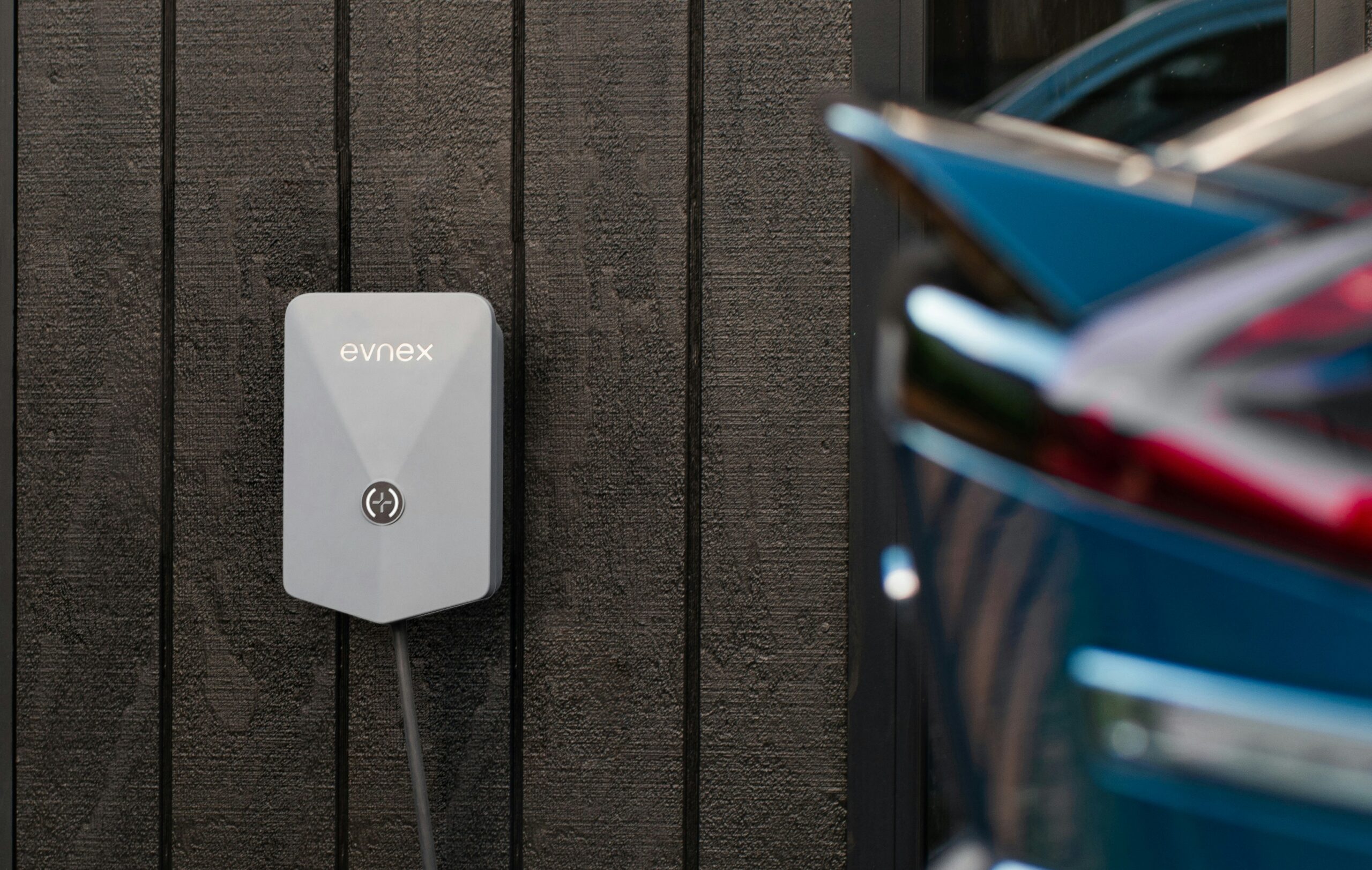
A smart home charger — typically 7 kW on single phase, up to 22 kW on three phase — can be scheduled or, better, set to solar-tracking mode, where it modulates charging to match your surplus in real time. The car soaks up exactly what the house is not using, and stops when clouds roll over. If the car is away weekdays, a scheduled overnight window on an EV tariff is the fallback.
Do you need a bigger battery because you have an EV?
Usually not — and this trips people up. Charging a 60 kWh car through a home battery would need a battery larger than most houses justify, and every stored kilowatt-hour makes a round trip through two conversions. The efficient pattern is: solar charges the car directly when it is home in daylight; the home battery covers the house’s evening; the grid covers long-range top-ups. Size the battery to the house, not the car — the usual sizing rules hold.
Phase check before you buy an EV charger
A 22 kW EV charger needs three-phase supply; most homes are single phase and top out around 7 kW — which still adds roughly 40–50 km of range per hour, far more than a daily commute needs. Here is how to tell what you have before a spec sheet talks you into an upgrade you do not need.
Panels, battery, charger and phase are one design problem, not four purchases. Scoping them together is cheaper than retrofitting them in sequence.
Sources: NRGPAL — EV charging · Essential Services Commission — feed-in tariff
Every figure on this page is checked against its primary source before publication. If a program or market figure changes, this page is updated and the verification date above moves with it.
Planning solar with an EV in the driveway?
Talk it through with a person — array size, charger, battery and your phase, scoped as one system.