
Product Guides
FOXESS backup power: EPS circuits vs whole-home AirGate
Every FOXESS inverter we install can keep power on in a blackout, but how much of the house stays on depends on the wiring. As standard, the inverter’s EPS output supplies a dedicated backed-up circuit; add FOXESS’s AirGate and the whole switchboard can be backed up. Here is how each works, what each inverter can supply and how to choose.
Published 11 September 2026 · Facts last verified 7 October 2026
Quick answer: FOXESS backup comes in two forms. As standard, the inverter’s EPS (emergency power supply) output feeds a dedicated backed-up circuit, typically the fridge, lights, internet and some power points, switching over in under 10 ms on the KH series and under 20 ms on the H1 G2 and H3 Smart. For whole-home backup, add FOXESS’s optional AirGate: a 63 A unit in the switchboard rated for up to 14.5 kW single phase or 43.5 kW three phase.
FOXESS backup depends on two things: how the system is wired and how much the inverter can supply. A battery doesn’t keep the lights on by itself. In an outage the inverter has to disconnect from the grid and supply only the circuits wired for backup, so which circuits stay on is decided when the system is designed. For the general picture across brands, see whole-home vs essential-circuit backup.
How FOXESS backup works in a blackout
Each FOXESS hybrid inverter has an EPS output, separate from its grid connection. When the grid fails, FOXESS’s manuals say the system supplies emergency power from the panels or the battery, and that a battery is necessary in EPS mode. The switchover is quick: under 10 ms on the KH8 and KH9.9, and under 20 ms on the H1 G2 and the H3 Smart.
In Australia, FOXESS requires the EPS output to be connected to a dedicated load circuit, with the EPS and grid neutrals paralleled. In practice your electrician moves the circuits you choose onto a backed-up section of the switchboard, or a small separate board, fed from the EPS output. Everything else in the house goes off with the grid.
FOXESS EPS ratings by inverter
| Inverter | Supply | Backup (EPS) output | Switchover |
|---|---|---|---|
| H1-5.0-E-G2 | Single phase | 5,000 VA | Under 20 ms |
| KH8 | Single phase | 8,000 VA | Under 10 ms |
| KH9.9 | Single phase | 9,900 VA | Under 10 ms |
| H3-5.0-Smart | Three phase | Rated by model (see datasheet) | Under 20 ms |
| H3-9.9-Smart | Three phase | Rated by model (see datasheet) | Under 20 ms |
| H3-15.0-Smart | Three phase | Rated by model (see datasheet) | Under 20 ms |
The single-phase models can also supply a short peak for 60 seconds: 6 kVA on the H1 G2, 10 kW on the KH8 and 12 kW on the KH9.9. That headroom helps appliances that draw a surge as they start, such as a fridge compressor or a pump. Plan around the continuous rating, though: add up what you want running at once and keep it under the backup output.
What to put on the backed-up circuit
A backed-up circuit works best for loads that are small, important and hard to do without:
- the fridge and freezer
- lights, or at least those in the main living areas
- the internet modem and NBN connection box, so Wi-Fi and phone calls keep working
- a few power points for charging devices and running a television
- gas heating controls and igniters, which need power even though the heat comes from gas
- medical equipment, if anyone at home relies on it (tell us at the design stage)
Leave off loads that would drain the battery quickly or exceed the output: ovens and cooktops, electric hot water, ducted reverse-cycle air conditioning, pool heating and EV chargers.
Whole-home backup with the FOXESS AirGate
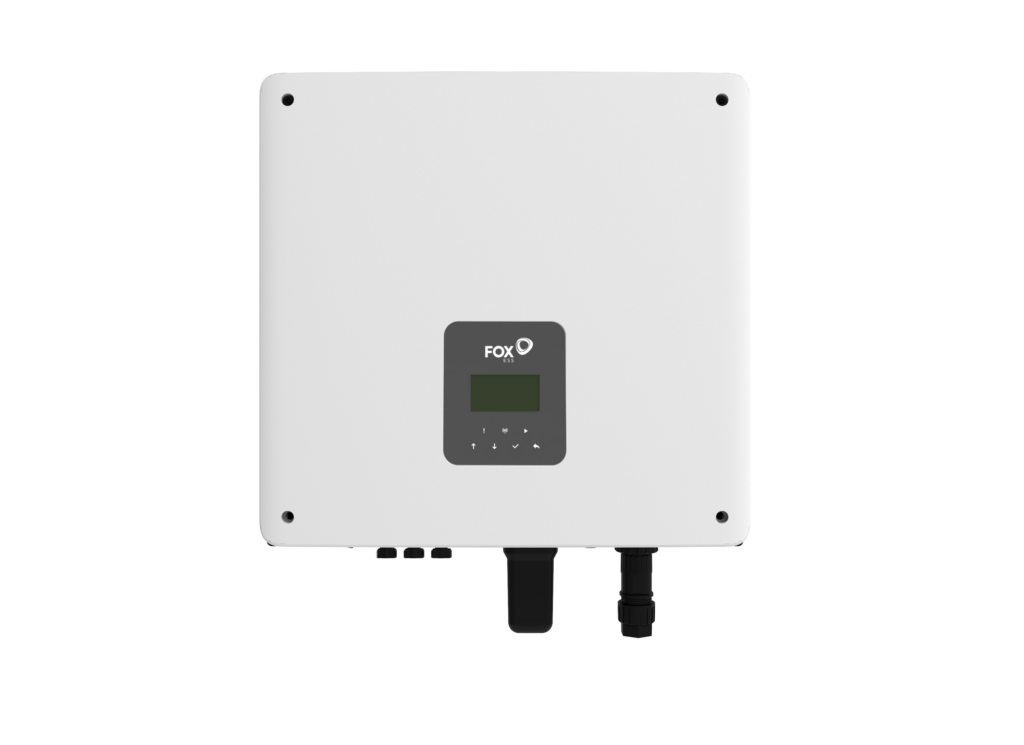
The AirGate is FOXESS’s whole-home backup unit. It mounts on a standard 35 mm DIN rail in the switchboard and comes in a single-phase version (AG-S) and a three-phase version (AG-T). Both are rated 63 A, and FOXESS rates them for full-house backup of up to 14.5 kW on single phase and 43.5 kW on three phase. FOXESS describes it as a five-in-one device: circuit breaker, changeover switch, metering, bypass switch and CTs. The AG-S works with the H1 G2 and KH; the AG-T also works with the H3 Smart.
Two details matter when you weigh it up:
- The rating is a ceiling, not a supply. In an outage the house still runs on what the FOXESS inverter and battery can deliver. A 5 kW H1 G2 can’t carry 10 kW of load because the AirGate is rated for more, so whole-home backup still calls for some load management.
- Existing solar can keep working. FOXESS says a third-party solar inverter can work in off-grid mode with the AirGate, so an older solar system on the same switchboard can contribute during a daytime outage.
In our packages the EPS backed-up circuit is standard and the AirGate is an optional extra. Ask about it when you request your quote, because it changes the switchboard work.
EPS circuit or AirGate: which do you need?
| EPS backed-up circuit (standard) | AirGate whole-home backup (optional) | |
|---|---|---|
| What stays on | The circuits wired to the EPS output | The whole switchboard, within the inverter’s output |
| Extra hardware | None beyond a dedicated circuit or small board | An AirGate (AG-S or AG-T) on a DIN rail in the switchboard |
| Rating that limits it | The inverter’s EPS output, which varies by model | 63 A, up to 14.5 kW single phase or 43.5 kW three phase, and the inverter’s own output |
| Existing solar inverter in an outage | Off, like any grid-tied inverter | Can work in off-grid mode, per FOXESS |
| Best for | Essentials: fridge, lights, internet, a few power points | Homes that want everything on and will manage big loads |
Stay with the standard EPS circuit if you mainly want the fridge, lights and internet to ride through an outage. Ask about the AirGate if you want the whole house on, you work from home, or you want an existing solar system running in a daytime outage. If whole-home backup is the main reason you are buying a battery, also compare GoodWe’s ESA, which has a 63 A bypass built in: see FOXESS vs GoodWe.
How long the backup lasts
Backup time depends on two numbers: the usable energy in the battery and how much the backed-up loads draw. Our FOXESS packages carry 27.84 or 41.76 kWh, all of it usable on the CQ7, but the battery is rarely full at the moment the grid drops. Our guide to how long a battery lasts in a blackout shows how to work it out for your loads.
Two things stretch it. First, the battery needs charge in hand: one that empties itself every evening has little left for an outage at 2 am. If backup matters to you, tell us at the design stage, because it changes how the battery’s work mode and charge times should be set. Second, daylight helps: FOXESS’s manuals say the system supplies emergency power from the panels or the battery, so on a sunny day the panels carry part of the backed-up load.
Backup in our FOXESS packages
Every FOXESS package we install includes the EPS backed-up circuit, with the AirGate as an option. On single phase, the KH series gives the most backup output and the quickest switchover: see the FOXESS KH8 8 kW system with 27.84 kWh or the KH9.9 system with 41.76 kWh. On three phase, the H3 Smart 15 kW system with 41.76 kWh pairs the largest EPS output in our FOXESS range with the larger stack. The FOXESS battery systems guide lists every combination.
Backup is the fourth question in Build Your System, because the answer changes the equipment and the switchboard work. We confirm which circuits to back up at the site assessment.
Frequently asked questions
Does FOXESS have whole-home backup?
Yes, with the optional AirGate. It mounts in the switchboard, is rated 63 A and supports full-house backup of up to 14.5 kW on single phase and 43.5 kW on three phase, within what the inverter and battery can supply. Without it, a FOXESS inverter’s EPS output backs up a dedicated circuit of essential loads.
What is EPS on a FOXESS inverter?
EPS stands for emergency power supply. It is a separate output on FOXESS hybrid inverters that supplies backed-up loads when the grid fails, from the battery and, in daylight, the panels. In Australia FOXESS requires it to feed a dedicated load circuit. It is rated 5 kVA on the H1 G2, 8 kVA on the KH8 and 9.9 kVA on the KH9.9; the H3 Smart’s rating depends on the model.
How fast does a FOXESS system switch to backup?
In under 10 ms on the KH8 and KH9.9, and under 20 ms on the H1 G2 and the H3 Smart. That is a fraction of a second, but lights may flicker and sensitive electronics such as a desktop computer can restart, so a small uninterruptible power supply (UPS) is worth considering where that matters.
Does FOXESS backup work without a battery?
No. FOXESS’s manuals state that a battery is necessary in EPS mode, so a FOXESS hybrid inverter without a battery has no backup supply when the grid fails. With a battery, the system supplies the backed-up loads from the battery and, during the day, from the panels.
Sources: FOXESS AirGate datasheet (AU) · FOXESS H1 G2 datasheet (AU) · FOXESS KH datasheet (AU) · FOXESS H3 Smart datasheet (AU) · FOXESS H1/AC1 G2 user manual (AU) · FOXESS KH user manual · FOXESS Australia support — EPS wiring FAQ · FOXESS CQ7 datasheet (AU) · FOXESS — FoxCloud 2.0 · GoodWe ESA single-phase datasheet (AU)
Every figure on this page is checked against its primary source before publication. If a datasheet or a manual changes, this page is updated and the verification date above moves with it.
Decide what stays on before the next blackout
Build Your System asks whether you want backup power, along with your solar, phase and bill, then recommends a system with the right backup arrangement and indicative pricing.