
Product Guides
How Build Your System works: from four questions to a priced package
Build Your System turns four questions about your home into a recommended FOXESS or GoodWe battery package with an indicative price. Here is what each question does, what the recommendation shows, and how it becomes a written quote after a site assessment.
Published 6 October 2026 · Facts last verified 7 October 2026
Quick answer: Build Your System asks four questions: whether you already have solar, whether your home is single or three phase, roughly what your quarterly bill is, and whether you want backup power. It then recommends one FOXESS or GoodWe package, with a smaller and a larger option beside it and an indicative price that isn’t a quote. Add it to My Quote, request your quote, and we confirm the details at a site assessment.
If you’d like to build your own solar battery system online before talking to anyone, Build Your System is the place to start. It works from the same packages we install, so the recommendation is a real system you can take to a quote rather than a generic estimate.
How to build your own solar battery system online
The tool runs in five steps: four guided questions, then a recommendation at step 5 of 5. From there you add a system to My Quote and choose Request My Quote. We confirm the details at a site assessment and send you a written quote.
If you already know what you want, you can skip the estimate altogether and choose the battery capacity and inverter size directly. Either way, the next step is a quote request, not a purchase.
The four questions, and why each one is asked
1. Do you already have solar? You choose between adding a battery to an existing system and installing solar and a battery together. The answer changes the design: an existing system may keep its current inverter, with the battery connected alongside it, while a new system is built around a hybrid inverter from the start. Our guide to adding a battery to existing solar explains both routes.
2. Single or three phase? Phase is a hard limit on compatibility: it decides which inverters suit your home and how much you can export, so it narrows the choice of packages. “Not sure” is a valid answer, and we confirm the supply on site. Our single phase vs three phase guide shows how to check.
3. Roughly what is your quarterly bill? Your bill is a guide to how much power you use and how much storage is worth having. It doesn’t need to be exact. For the thinking behind battery sizes, see what size home battery you need.
4. Do you want backup power? Backup changes the equipment and how the switchboard is arranged, so it is asked before any system is recommended. Backing up a few essential circuits and backing up the whole house are different designs; whole-home vs essential-circuit backup compares them.
What the recommendation shows
Step 5 shows one recommended system, with a smaller and a larger option beside it. Seeing three sizes together makes the trade-off visible: a smaller battery costs less but covers less of your evening and night, while a larger one covers more but costs more.
The price shown is indicative, not a quote. Any rebate shown is indicative too, and is confirmed through the program itself. The federal battery discount is calculated on usable capacity and, since 1 May 2026, has been tiered by size, so it doesn’t grow in step with the battery. We explain the effect in why a bigger battery doesn’t mean a bigger rebate.
How the packages are built
Every system in the tool is one of our solar battery packages: a FOXESS or GoodWe hybrid inverter and battery, for single or three-phase homes, with 16 to 48 kWh of storage.
| Range | Supply | Inverter | Battery sizes |
|---|---|---|---|
| FOXESS H1 G2 | Single phase | 5 kW | 27.84 or 41.76 kWh |
| FOXESS KH8 and KH9.9 | Single phase | 8 or 9.9 kW | 27.84 or 41.76 kWh |
| FOXESS H3 Smart | Three phase | 5, 9.9 or 15 kW | 27.84 kWh (5 kW); 27.84 or 41.76 kWh (9.9 and 15 kW) |
| GoodWe ESA | Single phase | 9.999 kW | 16, 24, 32, 40 or 48 kWh |
| GoodWe ESA | Three phase | 9.999 kW | 24, 32, 40 or 48 kWh |
| GoodWe ESA | Three phase | 15 kW | 32, 40 or 48 kWh |
The battery sizes follow the modules. A FOXESS CQ7 module stores 6.96 kWh, all of it usable, so four make 27.84 kWh and six make 41.76 kWh. A GoodWe battery module gives 8.0 kWh usable, so two to six make 16 to 48 kWh. Starting points include the FOXESS 5 kW single-phase system with 27.84 kWh, the GoodWe ESA 9.99 kW single-phase system with 16 kWh and the FOXESS 9.9 kW three-phase system with 27.84 kWh.
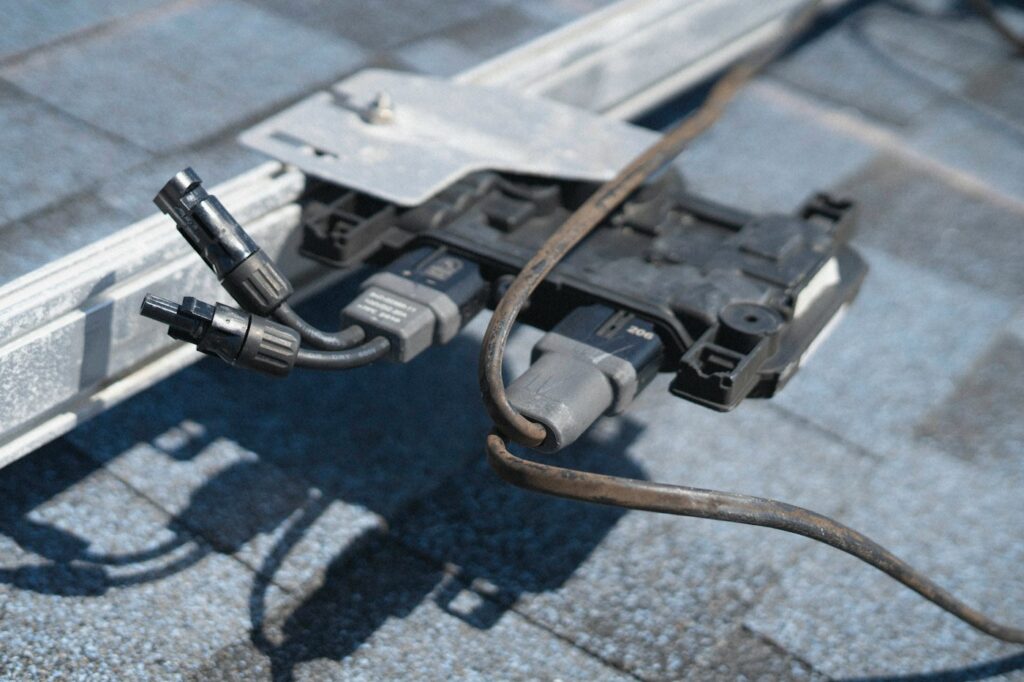
Panels, mounting and installation are quoted after the site assessment, because the roof decides how many panels fit and how they are mounted. If you have a panel preference, mention it when you request your quote.
From My Quote to a written quote
When a system looks right, add it to My Quote and choose Request My Quote. At the site assessment we confirm four things:
- Phase: the supply your home actually has.
- Roof: space, direction, shading and mounting for the panels.
- Switchboard: whether it can take the new equipment and, if you want backup, how the backed-up circuits will be arranged.
- Network rules: your distributor’s connection and export limits. United Energy, for example, allows 5 kW of export on single-phase connections and 15 kW on three-phase.
We then send a written quote. The final price depends on the property, the roof, the switchboard, the equipment and your eligibility for programs. Our own 5-year workmanship warranty comes on top of the manufacturers’ warranties and your rights under the Australian Consumer Law.
Other ways to start
Prefer to talk it through? Book a consultation instead and go through your options with us. If you’d like a feel for the savings first, our battery savings calculator gives a starting point from your bill. When you’re ready, come back and size a system for your home.
Frequently asked questions
Is the price in Build Your System a quote?
No. The price shown with each recommendation is indicative. We send a written quote after a site assessment, once the phase, roof, switchboard and network rules are confirmed. The final price depends on the property, the roof, the switchboard, the equipment and your eligibility for programs, and any rebate shown is confirmed through the program itself.
What if I don’t know whether my home is single or three phase?
Choose “not sure”. It is a valid answer, and we confirm your supply at the site assessment. Phase matters because it decides which inverters suit your home and how much you can export, so it is worth knowing before you compare packages, but you don’t need to work it out before you start.
Can I add a battery to my existing solar system?
Yes. The first question asks whether you already have solar, and choosing to add a battery to an existing system shapes the recommendation around it. At the site assessment we check your current inverter, panels and switchboard, which decide whether the battery connects alongside your existing inverter or a new hybrid inverter replaces it.
Does Build Your System include solar panels?
The recommendation is built around the inverter and battery. Panels, mounting and installation are quoted after the site assessment, because the roof’s size, direction and shading decide how many panels fit and which suit it. If you have a preference, such as a particular brand or Australian made panels, mention it when you request your quote.
Does the price include rebates?
Any rebate shown is indicative and confirmed through the program. The federal battery discount is calculated on the battery’s usable capacity and, since 1 May 2026, has been tiered by size, so each extra kWh earns less in larger batteries. Victorian programs have their own eligibility rules.
Sources: FOXESS CQ7 datasheet (AU) · FOXESS H1 G2 datasheet (AU) · FOXESS KH datasheet (AU) · FOXESS H3 Smart datasheet (AU) · GoodWe ESA single-phase and battery module datasheet (AU) · GoodWe ESA three-phase datasheet (AU) · Clean Energy Regulator — Cheaper Home Batteries Program · United Energy — solar connection process
Every figure on this page is checked against its primary source before publication. If a datasheet, a program or the tool changes, this page is updated and the verification date above moves with it.
Start with four questions
Answer four questions about your home and see a recommended system, a smaller and a larger option, and indicative pricing you can turn into a written quote.