
Product Guides
GoodWe ESA installation: space, stacking and where it can go
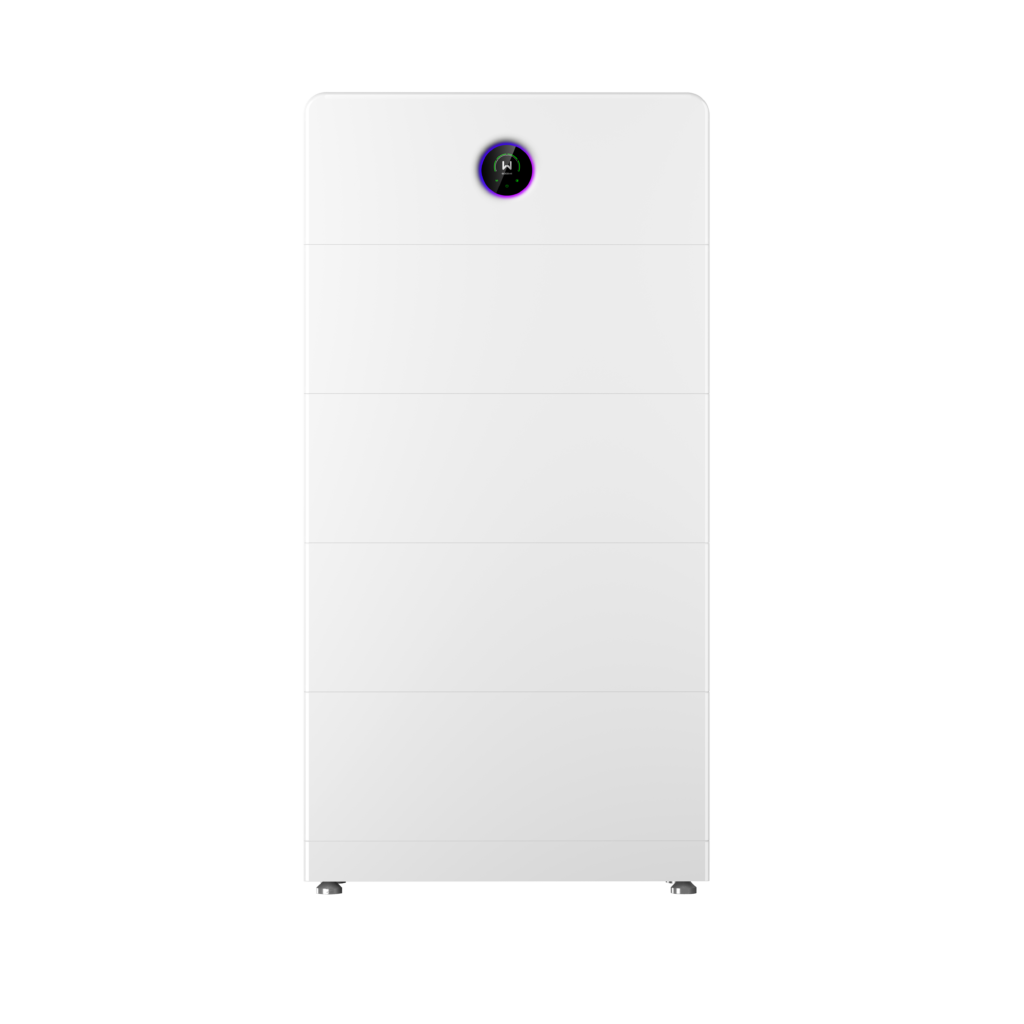
The GoodWe ESA takes up a single column of floor or wall space, 800 mm wide and about 270 mm deep, but it is tall and heavy, and where it can go depends on GoodWe’s manual and Australian installation rules as much as on what looks tidy. Here are the dimensions, the stack heights, the mounting options and what to check when choosing a spot.
Published 24 August 2026 · Facts last verified 7 October 2026
Quick answer: a GoodWe ESA installation needs a column of space 800 mm wide and about 270 mm deep, on a floor or a wall that can carry the weight. Height grows by about 326 mm with each battery module, so a six-module system stands roughly 2.3 m tall before its base and weighs about 500 kg. It is rated IP66, but GoodWe recommends a sheltered spot out of direct sun and rain, and Australian rules keep batteries out of living areas.
Planning a GoodWe ESA installation comes down to three questions: is there a spot big enough, can the floor or wall carry the weight, and is the spot allowed under GoodWe’s conditions and Australian rules? We answer them at the site assessment, but knowing the numbers helps you suggest the right place. What the system is and how it works is in our GoodWe ESA all-in-one guide.
GoodWe ESA dimensions and weights
| Component | Width × height × depth | Weight |
|---|---|---|
| Single-phase inverter GW9.999K-EHA-G20 | 800 × 300 × 270 mm | 26 kg |
| Three-phase inverter GW9.999K-ETA-G20 or GW15K-ETA-G20 | 800 × 340 × 270 mm | 34 kg |
| Battery module GW8.3-BAT-D-G21 | 800 × 326 × 270 mm | 79 kg (±1 kg) |
Every part shares the same 800 mm width and 270 mm depth, so the footprint doesn’t change with capacity. The system grows upward instead, with the inverter on top, and stands on the battery base and feet that ship with the inverter.
How tall and heavy is each stack?
Adding up GoodWe’s figures gives the height and weight of each of our packages before the base and feet. This is our arithmetic, not a GoodWe figure, and wall-mounted layouts differ.
| Modules (usable) | Single phase: height, weight | Three phase: height, weight |
|---|---|---|
| 2 (16 kWh) | 952 mm, 184 kg | Not offered |
| 3 (24 kWh) | 1,278 mm, 263 kg | 1,318 mm, 271 kg |
| 4 (32 kWh) | 1,604 mm, 342 kg | 1,644 mm, 350 kg |
| 5 (40 kWh) | 1,930 mm, 421 kg | 1,970 mm, 429 kg |
| 6 (48 kWh) | 2,256 mm, 500 kg | 2,296 mm, 508 kg |
On three phase, three-module stacks are offered on the 9.999 kW model only; the 15 kW model starts at four. A six-module stack is taller than a standard doorway, and GoodWe’s three-phase manual only allows six stacked on the floor when the stack stands against a wall with its anti-tip bracket fixed.
Floor or wall?
Both inverters are rated for wall or floor mounting, and the battery modules can be floor-stacked or wall-mounted. GoodWe’s Australian manual for the three-phase ESA sets out the limits:
- On the floor, away from a wall: up to four modules.
- On the floor, against a wall: up to six, with the anti-tip bracket fixed to the wall.
- On the wall: 8.3 kWh modules hang on brackets in groups of no more than two, up to six in total, and the wall’s load-bearing capacity has to be assessed first.
- Lifting: above three modules, the installer must use lifting equipment.
For the single-phase series, GoodWe says floor and wall mounting are both possible, with wall mounting limited in storage capacity because of the weight. The stack must sit level, so a flat, solid floor such as a concrete garage slab is the easy case, and a wall-mounted layout needs a wall that can take several hundred kilograms. Our guide to the GoodWe 8.3 kWh battery module covers what each module adds.
What does a GoodWe ESA installation need from the location?
- Shelter. The inverter and modules are rated IP66 and suit indoor or outdoor installation, but GoodWe’s manual says to install them away from direct sunlight, rain and snow build-up, and recommends a sheltered location.
- Temperature. The inverters run from −35 to +60 °C, and the single-phase model derates above +40 °C, so a wall that bakes in the afternoon sun is a poor choice. The G21 modules charge between +2 and +55 °C.
- Air and access. GoodWe asks for space around the unit for installation, ventilation and heat dissipation, and rules out flammable, explosive or corrosive environments.
- Salt. GoodWe treats areas within 500 m of the coast as salt-damage areas and asks to be consulted before an outdoor installation there. Its single-phase ESA warranty excludes damage from sea coasts, saltwater or other aggressive atmospheres unless GoodWe has approved the installation in writing.
- Noise. The single-phase 9.999 kW inverter is cooled by natural convection and rated at 35 dB or less, and each module at 29 dB or less. The three-phase models use fan cooling, so keep them away from bedroom windows where you can.
- Internet. Under Victoria’s emergency backstop rules, new solar systems generally need a reliable internet connection so the distributor can communicate with the inverter. The ESA connects over Wi-Fi or LAN, so a spot within reach of your router or a network cable saves trouble later.
Which rules decide where a battery can go?
Australian installation rules for home batteries, set out in AS/NZS 5139 and summarised by the Electrical Regulatory Authorities Council, apply on top of GoodWe’s conditions. In general terms they keep battery systems out of habitable rooms such as bedrooms and living areas, out of ceiling spaces and wall cavities, and not beneath stairs, walkways or escape routes, with set distances from exits and from the windows and vents of habitable rooms. A battery close to a wall with a habitable room behind it may need a fire-resistant barrier, and in a garage or carport it may need protection from vehicle impact, such as a bollard. Our guide to home battery installation rules explains each requirement, and we check them at the site assessment.
Good spots and poor spots
The usual homes for an ESA are a garage wall, a carport or a sheltered side wall under the eaves. When choosing between them:
- Close to the main switchboard. With whole-home backup through the ESA, the household’s circuits are fed through the unit, so a short cable run to the switchboard keeps the job simpler.
- Out of the afternoon sun. A south- or east-facing wall, or a spot under cover, stays cooler than a west-facing wall in summer.
- Clear of the car. In a garage, leave room to open car doors and walk past, and ask about vehicle-impact protection if a car could reach the battery.
- Easy to reach. Leave room in front for an electrician to work and for you to reach the battery switches.
The smallest stack in our range, the 9.99 kW single-phase system with 16 kWh, stands under a metre tall before its base, while the 9.99 kW single-phase system with 48 kWh is the tallest single-phase option. Build Your System recommends a size first, and we confirm the spot on site.
Frequently asked questions
How much space does a GoodWe ESA need?
A GoodWe ESA needs a column 800 mm wide and about 270 mm deep, plus space around it for ventilation and service. Its height depends on the number of battery modules: about 326 mm each, plus 300 mm for the single-phase inverter or 340 mm for the three-phase one, before the base. Two modules come to under a metre and six to about 2.3 m.
Can a GoodWe ESA be installed outside?
Yes. The inverter and battery modules are rated IP66 and GoodWe says they suit indoor or outdoor installation. Its manual still says to keep them away from direct sunlight, rain and snow build-up, and recommends a sheltered spot. Within 500 m of the coast, GoodWe asks to be consulted before an outdoor installation, and Australian location rules apply as well.
Can a GoodWe ESA be wall mounted?
Yes, within limits. Both inverters are rated for wall or floor mounting. GoodWe’s three-phase manual has the 8.3 kWh modules hang on brackets in groups of no more than two, up to six in total, and requires the wall’s load-bearing capacity to be assessed. Large stacks can instead stand on the floor against a wall, fixed with the anti-tip bracket.
Can a GoodWe ESA go in a garage?
Yes, and a garage wall is one of the usual places for one. The battery has to meet the Australian location rules, which set distances from exits and from windows and vents to habitable rooms, and in a garage it may need protection from vehicle impact, such as a bollard. A garage also gives the shelter from sun and rain that GoodWe recommends.
How heavy is a GoodWe ESA?
The single-phase inverter weighs 26 kg, the three-phase inverters 34 kg and each GW8.3-BAT-D-G21 battery module about 79 kg. Before the base, a two-module single-phase system weighs about 184 kg and a six-module system about 500 kg, which is why the floor or wall is checked and lifting equipment is used for stacks above three modules.
Sources: GoodWe ESA single-phase and battery module datasheet (AU) · GoodWe ESA three-phase datasheet (AU) · GoodWe ESA three-phase user manual (AU, V1.0, January 2026) · GoodWe limited warranty for the ESA (AU/NZ) · GoodWe — ESA series launch release (5 November 2025) · Electrical Regulatory Authorities Council — battery energy storage system installation requirements · Victorian Government — emergency backstop mechanism for solar
Every figure on this page is checked against its primary source before publication. If a datasheet, a manual or an installation rule changes, this page is updated and the verification date above moves with it.
Check the space before you choose a size
Build Your System recommends a system from your phase, your bill and your backup needs, with indicative pricing. We measure up and confirm the location at the site assessment.