
Solar & Battery Guides
Home battery installation rules in Australia: where a battery can go
Where a home battery can go is set by a national standard, AS/NZS 5139, and by the manufacturer’s installation manual. Together they keep batteries out of living areas and escape routes, set clearances from doors, windows and vents, and decide when a garage battery needs a fire barrier or a bollard. Here is what the rules say, in plain language.
Published 17 September 2026 · Facts last verified 7 October 2026
Quick answer: home batteries are installed to AS/NZS 5139:2019, amended in December 2025, by a licensed electrician. A battery can’t go in a habitable room, ceiling space, wall cavity, under stairs or in an escape route, and must keep clear of exits and of opening windows and vents into habitable rooms. Garages and outside walls are the usual spots, sometimes needing a fire barrier on a wall shared with a living area and a bollard where a car could hit it.
Home battery installation requirements come from three places: the Australian and New Zealand standard for battery systems, the wiring and grid-connection standards it sits beside, and the manufacturer’s manual. Your installer has to satisfy all three, and the strictest applies. This guide explains what they mean for a typical Victorian home; a site assessment confirms them for yours.
Home battery installation requirements: which rules apply?
The core standard is AS/NZS 5139:2019, Electrical installations: Safety of battery systems for use with power conversion equipment. Energy Safe Victoria lists it with AS/NZS 3000 (the wiring rules) and AS/NZS 4777.1 (grid connection of inverters) among the standards that govern battery installations, and Victoria’s Electricity Safety (General) Regulations 2019 call it up.
Amendment 1 was published on 19 December 2025. It clarified where batteries may go and the clearances around them, changed the rule for wide openings such as garage doors, allowed a battery system’s inverter inside the restricted zone around it, set a minimum thickness for barrier materials and required a printed safety data sheet on site. New South Wales made it mandatory on publication and Western Australia from 19 June 2026. Energy Safe Victoria’s general approach is that amendments to standards called up in Victorian law apply from the date they are published, unless it says otherwise.
Where can’t a home battery go?
Regulators’ summaries of AS/NZS 5139 list the places a battery system must not be installed:
- Habitable rooms: bedrooms, living, family and lounge rooms, kitchens and dining rooms, studies and home offices, playrooms, entertainment rooms and sunrooms.
- Ceiling spaces and wall cavities.
- Under stairs and walkways, including beneath entrance and exit walkways.
- Escape routes: passageways, walkways and evacuation routes.
- Roofs, unless there is a permanent stair or ladder to reach the battery.
- Hazardous areas, such as the zones around gas cylinders, gas meters and their relief vents. Victoria’s gas requirements set their own distances, which the installer measures on site.
- Anywhere a switchboard couldn’t go under the wiring rules.
Bathrooms and laundries aren’t habitable rooms, but NT WorkSafe’s guidance treats them as unsuitable because they are wet areas. In practice, that leaves garages, carports and sheltered outside walls as the usual places for a home battery.
Clearances around doors, windows, vents and appliances
AS/NZS 5139 also sets a restricted zone around a battery. As regulators summarise it:
| Nearby feature | Rule |
|---|---|
| Opening window or vent into a habitable room | The battery can’t be within 600 mm of it horizontally, or within 900 mm below it |
| Exit 900 mm wide or narrower, such as a standard door | The battery can’t be within 600 mm of it |
| Wider opening, such as a garage door | Since Amendment 1, the battery may sit within 600 mm, subject to the standard’s conditions |
| Unrelated appliances, such as a hot water unit, heat pump or air conditioner | Not within 600 mm of either side or the front of the battery, or 900 mm above it |
| The battery system’s own inverter | Since Amendment 1, allowed within the restricted zone |
Before the amendment, guidance on garage doors differed between states: New South Wales applied the 600 mm rule to every exit, garage doors included. The standard now deals with wide openings itself, and your installer checks the conditions that come with that on site.
When does a battery need a fire barrier?
If a battery is installed within 300 mm of a wall that has a habitable room on the other side, a non-combustible barrier is needed behind it, unless the wall is already made of a suitable material. Under the interpretation published by the Electrical Regulatory Authorities Council (ERAC):
- The barrier extends 600 mm beyond each side of the battery and 900 mm above it.
- It must be solid, with no vents or holes; openings over 5 mm are sealed with fire-retardant sealant.
- Brick, concrete, compressed cement sheeting and ceramic or clay tiles are acceptable. Plasterboard, timber panels and particle board are not.
- Since Amendment 1, barrier materials must be at least 6 mm thick.
So a battery on a brick-faced wall needs nothing extra, while a battery on a plasterboard wall with a bedroom behind it needs a barrier fitted first.
Can a battery go in a garage or carport?
Yes. Garages and carports aren’t habitable rooms, which makes them the easiest places to meet the rules. Three points come up in garages:
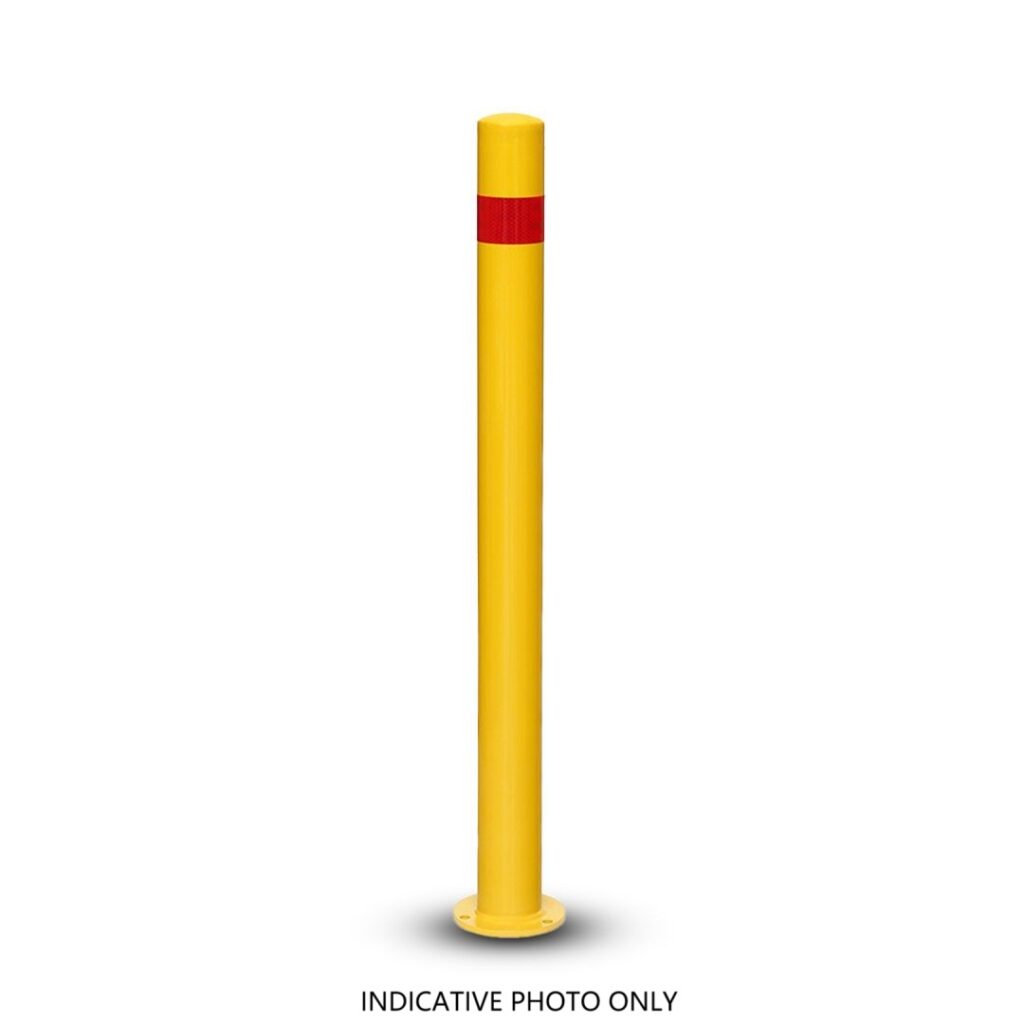
- Vehicle impact. A battery must not be installed where damage from a vehicle may be expected. A bollard in front of it, or a position a car can’t reach, deals with the risk.
- The garage door. Amendment 1 allows a battery within 600 mm of an opening wider than 900 mm, subject to conditions, but a standard door into the house still needs 600 mm.
- The shared wall. If the wall backs onto a habitable room and the battery is within 300 mm of it, the barrier rule above applies.
Carports and outside walls work too, within the manufacturer’s limits on sun and weather. NT WorkSafe’s guidance adds sensible exclusions: avoid spots that flood or get splashed, sit in direct sunlight, are next to a heat or ignition source, or are used to store gas bottles or other combustible materials.
What do the manufacturers add?
The installation manual can be stricter than the standard, and the installer has to follow both.
- GoodWe ESA. Rated IP66 and suitable for indoor or outdoor installation, but GoodWe’s three-phase ESA manual says to install it away from direct sunlight, rain and snow accumulation, recommends a sheltered location (a sunshade if needed), and asks for a spot out of children’s reach and away from noise-sensitive areas such as living areas. GoodWe’s single-phase ESA warranty also requires a ventilated location out of direct sunlight.
- FOXESS CQ7. Listed for outdoor or indoor installation, but its manual says the area must be protected from direct sunlight, rain and snow accumulation, with a shelter such as a rain canopy recommended. It asks for at least 300 mm of clearance around the battery for cooling, a hard, level floor, and distance from heat sources, flammable materials, gas valves, LPG cylinders, heat pumps and firewood stacks.
For the GoodWe unit’s dimensions and stacking, see GoodWe ESA installation. The chemistry inside both brands is explained in LFP batteries explained.
Signs, paperwork and who can install
A compliant installation is labelled. The Clean Energy Council’s labelling advice points to AS/NZS 5139 for a green reflective ‘ES’ sign at least 100 mm across, alongside hazard signs, and Amendment 1 adds a printed safety data sheet, protected from damage on site, for example in a sealed, durable clear pouch. Energy Safe Victoria also requires suitable RCD protection on circuits supplied from a battery’s backup output.
In Victoria, the work is done by registered electrical contractors and licensed electrical workers, who are responsible for compliance with the standards. For the federal Cheaper Home Batteries Program, the Clean Energy Regulator also requires an installer accredited by Solar Accreditation Australia and a battery on the Clean Energy Council’s approved list, and it treats the date the electrical certificate is signed as the installation date.
We design every installation around these rules at the site assessment. There is more on our home battery page, and the GoodWe ESA 9.99 kW single-phase system with 16 kWh and the FOXESS H1 G2 5 kW system with 27.84 kWh are typical starting points. You can size a system in Build Your System, and we confirm the location on site.
Frequently asked questions
Can a home battery be installed inside the house?
Not in a habitable room, which covers bedrooms, living and family rooms, kitchens, dining rooms, studies, playrooms and sunrooms. Ceiling spaces, wall cavities, the space under stairs and escape routes are also ruled out. A non-habitable space can work if the clearances are met and the manufacturer allows it, which is why garages, carports and sheltered outside walls are the usual choices.
Does a battery in the garage need a bollard?
It needs protection if a vehicle could hit it. Regulators’ interpretation of AS/NZS 5139 rules out locations where vehicle damage may be expected unless the risk is dealt with, for example with a bollard in front of the battery or by placing it where a car can’t reach. Whether your garage needs one depends on how cars park and move near the battery.
How far does a battery have to be from a window?
If the window opens into a habitable room, the battery can’t sit within 600 mm of it horizontally or within 900 mm below it. The same applies to vents and other ventilation openings into habitable rooms. The installer measures these distances on site, along with the manufacturer’s own clearance requirements.
Can a battery go next to the garage door?
Since Amendment 1 to AS/NZS 5139, published in December 2025, a battery may be installed within 600 mm of an opening wider than 900 mm, such as a garage door, subject to the standard’s conditions. Doors 900 mm wide or narrower still need 600 mm of clearance. Before the amendment, some states, including New South Wales, applied the 600 mm rule to garage doors too.
Who can install a home battery in Victoria?
Licensed electrical workers and registered electrical contractors, who must meet Energy Safe Victoria’s requirements and the relevant standards. For the federal battery discount, the installer must also be accredited by Solar Accreditation Australia and the battery must be on the Clean Energy Council’s approved list. Ask about both when you compare quotes, along with the manufacturer’s installation conditions.
Sources: Energy Safe Victoria — standards in Victoria’s energy safety laws · Energy Safe Victoria — battery energy storage systems · ERAC — battery energy storage system installation requirements (February 2021) · NT WorkSafe — safety requirements for installing battery energy storage systems · NSW Government — changes to the battery standard · WA Government — updated installation standards for battery systems · WorkSafe Queensland — amendment issued for battery installations · Clean Energy Council — advice on labelling (June 2023) · Clean Energy Regulator — Cheaper Home Batteries Program · GoodWe ESA three-phase user manual (AU) · GoodWe ESA single-phase datasheet (AU) · GoodWe ESA limited warranty (AU/NZ) · FOXESS CQ7 user manual · FOXESS CQ7 datasheet (AU)
Every figure on this page is checked against its primary source before publication. If a rule, a standard or a manual changes, this page is updated and the verification date above moves with it.
Find out where your battery can go
Build Your System recommends a system for your home, and our site assessment checks the location, clearances and switchboard before we send a written quote.