
Solar & Battery Guides
Why Australia leads the world in rooftop solar
No country puts solar on its houses like this one. The milestone numbers, the reasons behind them, and the storage chapter that comes next.
Published 24 September 2026 · Facts last verified 24 September 2026
Key points
- Australia passed four million rooftop solar installations in November 2024: around 25 GW of capacity, more than the coal fleet, on more than one in three homes.
- Detached homes with large owned rooftops, two decades of certificate support and a real installation industry explain the lead.
- In the December 2025 quarter, rooftop solar averaged a record 4,407 MW across the National Electricity Market.
- Rooftop solar now pushes midday demand to record lows, which is why exports earn near zero and storage is the next chapter.
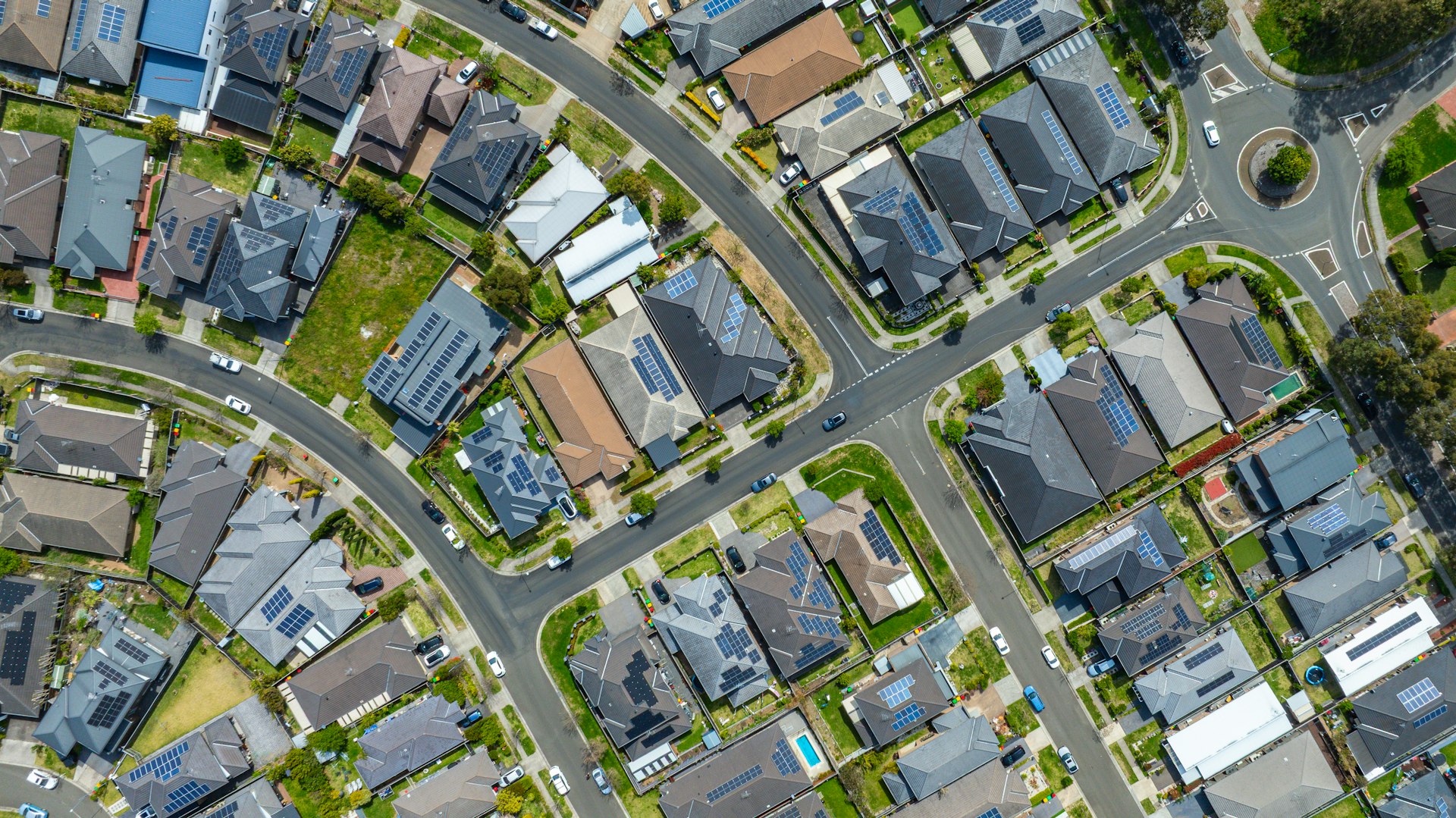
In November 2024, Australia passed four million rooftop solar installations. By the Clean Energy Council’s count that is around 25 GW of capacity — more than the country’s entire coal fleet — spread across more than one in three homes. Per person, nothing else in the world comes close.
How a mid-sized country ended up on top in rooftop solar
- The sun, obviously — but also the suburbs. Australia pairs world-class solar resource with a housing stock dominated by detached homes with large, owned rooftops. Countries with better subsidies but apartment-heavy cities cannot copy that.
- Two decades of consistent certificate support. The federal Small-scale Renewable Energy Scheme has discounted systems at the point of sale since 2011, topped by state programs like Victoria’s Solar Homes rebate.
- A real installation industry. More than ten thousand accredited installers — mostly small businesses — turned solar from a specialist purchase into a trade as ordinary as a hot water replacement.
- Retail prices that make self-generation rational. Australian households pay enough for grid power that a system paying for itself was never a green luxury — it was arithmetic.
What four million rooftops does to a grid
Collectively, rooftop solar is now the largest generator in the country at times — in the December 2025 quarter it averaged a record 4,407 MW across the National Electricity Market. On mild sunny days it pushes grid demand to record lows: South Australia’s demand has gone negative, its rooftops powering the whole state with surplus to export, and Victoria set its own record-low of 1,287 MW.
That success created the next problem: electricity is now abundant at noon and still expensive at 7pm. It is why exported solar earns near zero — Victoria no longer sets a minimum feed-in tariff — and why the next chapter is storage.
The storage chapter has already started
Battery capacity on the grid nearly quadrupled its role in a year, and behind the meter the federal Cheaper Home Batteries program is doing for storage what the SRES did for panels — with a discount that is tiered toward right-sized systems, not the biggest box on the truck. The country that led the world in generating its own power at home is now working out how to store it at home.
One in three homes already made this decision. Send us the eligibility check and our team will tell you what the programs offer the other two — including when the honest answer is that they offer you nothing.
Sources: Clean Energy Council — four million installations · energy.gov.au — rooftop milestone · AEMO — Q4 2025
Every figure on this page is checked against its primary source before publication. If a program or market figure changes, this page is updated and the verification date above moves with it.
Join the third of homes already generating
Take two minutes with the eligibility check and our team will tell you which solar and battery programs apply at your address.