
Solar & Battery Guides
Solar panel oversizing explained: why a 5 kW inverter can take 10 kW of panels
Solar panel oversizing means installing more panel capacity than your inverter’s output rating. Done inside the rules, it lifts output in the mornings, afternoons and winter, and with a battery behind a hybrid inverter you can go a long way past the old 6.6 kW-on-5 kW habit.
Published 12 January 2026 · Facts last verified 7 October 2026
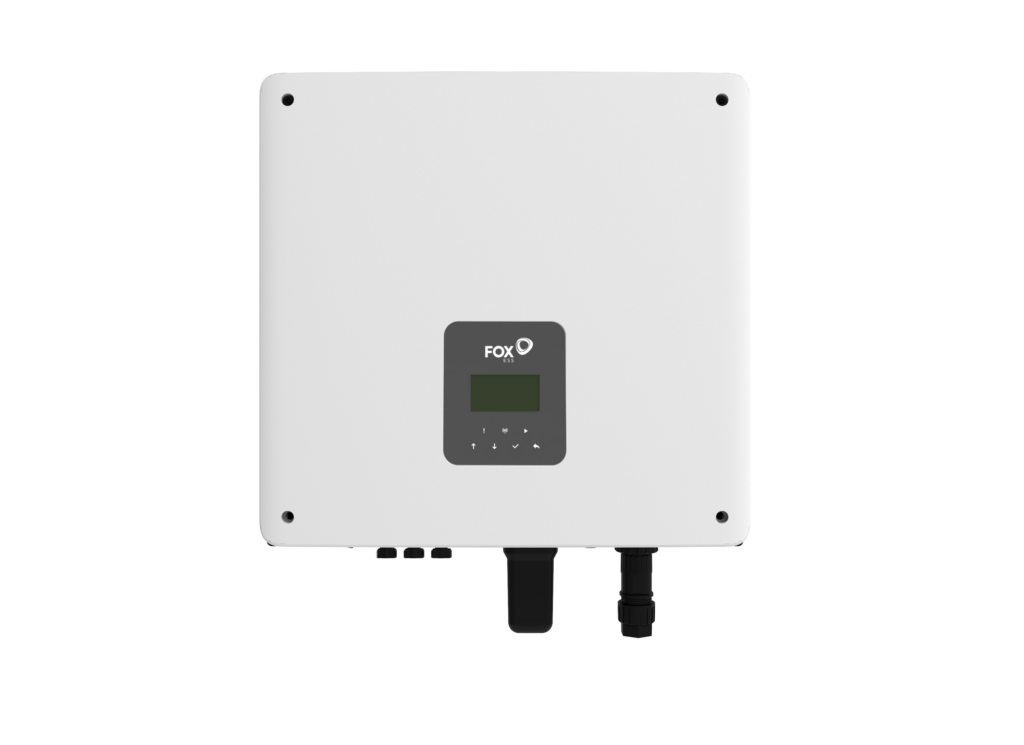
Quick answer: without a battery, Australian installation guidelines cap the panels at about 133% of the inverter’s AC rating, because the inverter must be at least 75% of the array. With a battery, the cap becomes the inverter maker’s own limit, which is 200% on most of the hybrid inverters we install. That is why a 5 kW FOXESS H1 G2 can run up to 10 kW of panels.
What is solar panel oversizing?
Every system has two ratings. The array is rated in kilowatts peak (kWp): the total of the panels’ nameplate wattages. The inverter is rated by the alternating current (AC) it can deliver to your switchboard, in kW. Oversizing simply means the first number is bigger than the second, so a 6.6 kWp array on a 5 kW inverter is oversized by 132%, and a 10 kWp array on the same inverter by 200%.
It sounds like a mismatch, but it isn’t. Panels are rated under laboratory conditions that a Victorian roof rarely sees: full sun at a fixed cell temperature, with the panel facing the light square-on. Heat, roof angle, haze, dust and the sun’s position all pull real output below the nameplate for most of the day, so a modestly bigger array keeps the inverter working closer to its rating for more of the day.
How much can you oversize a solar inverter in Australia?
Two limits apply, and the stricter one wins.
Without a battery: about 133%. The design guidelines accredited installers work to require the inverter’s rated AC output to be at least 75% of the array’s peak power. Turned around, the panels can be at most about 133% of the inverter’s rating. That is where the familiar 6.6 kW of panels on a 5 kW inverter comes from.
With a battery: the manufacturer’s limit. When a battery is part of the system, the guidelines let the array go past the 75% rule, up to whatever the inverter manufacturer allows. On the hybrid inverters in our packages that is roughly double the AC rating:
| Inverter | Supply | AC output | Maximum array (manufacturer) | Ratio |
|---|---|---|---|---|
| FOXESS H1-5.0-E-G2 | Single phase | 5 kW | 10 kWp | 200% |
| FOXESS KH8 | Single phase | 8 kW | 16 kWp | 200% |
| FOXESS KH9.9 | Single phase | 9.9 kW | 20 kWp | 202% |
| GoodWe ESA GW9.999K-EHA-G20 | Single phase | 9.999 kW | 20 kW of PV input | 200% |
| FOXESS H3-5.0-Smart | Three phase | 5 kW | 11 kWp | 220% |
| FOXESS H3-9.9-Smart | Three phase | 9.9 kW | 20 kWp | 202% |
| FOXESS H3-15.0-Smart | Three phase | 15 kW | 30 kWp | 200% |
These are ceilings, not targets. What actually fits also depends on your roof, the number of panels each input (MPPT) can take, and your network’s connection rules.
Why oversizing pays off
- More energy at the edges of the day. A bigger array reaches useful output earlier in the morning and holds it later in the afternoon, which is when most homes start using power.
- Better winter output. Melbourne’s short, low-sun winter days are where an undersized array hurts most. Extra panels lift the whole winter curve.
- East–west roofs. Panels split across two faces never peak at the same time, so you can add more of them before the inverter is the bottleneck.
- A fuller battery. A battery only stores what the panels make beyond what the house uses. More panels mean the battery is more likely to be full by sunset, especially on cloudy days.
What is clipping, and what does it cost you?
When the panels produce more than the inverter can handle, output is held at the inverter’s limit and the excess is lost. That is called clipping. On a heavily oversized, north-facing array it happens around midday on clear days, which is also when the energy is worth least, because every rooftop in the street is exporting at once.
A hybrid inverter changes the arithmetic. It has two separate limits: how much solar it can take in, and how much AC it can put out. The FOXESS H1 G2 5 kW, for example, accepts up to 10 kWp of panels and takes in up to 7.5 kW of solar power at any moment, while putting out up to 5 kW of AC. With a battery attached, part of the difference can go straight into the battery instead of being clipped, within the battery’s charge limits.
Oversizing doesn’t raise your export limit
Your distributor sets how much you can send back to the grid, and oversizing doesn’t change it. On Victoria’s networks the standard export limit for a single-phase home is 5 kW, three-phase homes get more, and some constrained areas are lower. Anything the panels make beyond what you use, store and are allowed to export is curtailed. That is why oversizing and a battery go together: the battery soaks up the midday surplus you couldn’t export anyway. If you’re not sure which supply you have, start with single phase vs three phase, because it decides both your inverter options and your export limit.
When oversizing doesn’t make sense
- Heavy shade. Extra panels on a shaded face add cost without much energy.
- No battery and a big array already. Without storage you’re held to about 133%, and past that point extra panels mostly add export you may not be paid for.
- Beyond the manufacturer’s limit. Going past the datasheet maximum risks the inverter warranty. We design every system inside it.
- Too many panels for the inputs. Each MPPT input has voltage and current limits. The string design has to fit them, not just the total kW.
How we size the array in our packages
Our packages pair each inverter with a battery, so the array can be sized past 133% where your roof and usage justify it. The FOXESS 5 kW battery system suits a modest roof with up to 10 kW of panels, the FOXESS 8 kW system covers up to 16 kW across three roof faces, and the GoodWe ESA 9.99 kW system takes up to 20 kW across four. Panels and mounting are quoted after a site assessment, because the roof decides the final number.
Frequently asked questions
Is it allowed to put 10 kW of panels on a 5 kW inverter?
Yes, if the system includes a battery and the inverter’s manufacturer allows it. The FOXESS H1 G2 5 kW is rated for up to 10 kWp. Without a battery, the guideline limit is about 6.67 kW of panels on a 5 kW inverter.
Does oversizing void the inverter warranty?
Not when the array stays inside the manufacturer’s stated maximum and the strings meet each input’s voltage and current limits. Exceeding the datasheet maximum can put the warranty at risk.
Will oversizing earn me more feed-in credits?
Only up to your export limit, which oversizing doesn’t change. The gain is in energy you use yourself or store, especially in the mornings, afternoons and winter.
Do I need a battery to oversize past 133%?
Yes. The 75% rule applies to systems without storage. With a battery, the manufacturer’s limit applies instead.
How much energy is lost to clipping?
It depends on the ratio, the roof’s direction and the weather. Losses are concentrated around clear-sky middays, the cheapest energy of the day, and a hybrid inverter can send part of it to the battery instead.
Related guides: what an MPPT is and how many you need · what a hybrid inverter is · what size inverter you need
Sources: Clean Energy Council — Guidelines for grid-connected solar PV systems (no storage), version 14 · SolarQuotes — the battery exception to the 133% limit (secondary) · FOXESS H1 G2 datasheet (AU) · FOXESS KH datasheet (AU) · FOXESS H3 Smart datasheet (AU) · GoodWe ESA single-phase datasheet (AU) · United Energy — solar connection process · AusNet — connections up to 30 kW
Every figure on this page is checked against its primary source before publication. If a rule or a datasheet changes, this page is updated and the verification date above moves with it.
Size the panels and the inverter together
Build Your System asks about your usage, your roof, your phase and your backup needs, then pairs an inverter and battery sized to the answers, with indicative pricing.