
Product Guides
FOXESS CQ7 battery: modules, stacking and the 27.84 vs 41.76 kWh packages
The CQ7 is FOXESS’s high-voltage home battery: a stack of 6.96 kWh lithium iron phosphate modules that can run from two modules to fourteen. We install it in two sizes, four modules (27.84 kWh) and six (41.76 kWh). Here is how a stack is built, where it can go, what the warranty covers and which size suits which home.
Published 26 June 2026 · Facts last verified 7 October 2026
Quick answer: the FOXESS CQ7 is a modular lithium iron phosphate (LFP) battery. Each module stores 6.96 kWh, all of it usable, and a stack is one CQ7-M master module plus 1 to 13 CQ7-S modules, from 13.92 to 97.44 kWh. Our packages use four modules (27.84 kWh) or six (41.76 kWh). It is rated IP65, is warranted for 10 years to 70% of nominal energy or a throughput limit, and joined the Clean Energy Council’s approved list on 18 May 2026.
The FOXESS CQ7 is the battery in every FOXESS package we sell, paired with an H1 G2, KH or H3 Smart hybrid inverter. It is a high-voltage battery: its modules connect in series, so each module added raises the stack’s voltage, from 230.4 V nominal for four modules to 345.6 V for six. The same battery serves every FOXESS inverter we install, from the 5 kW single-phase H1 G2 to the 15 kW three-phase H3 Smart.
How a FOXESS CQ7 stack is built
Every stack has two kinds of module:
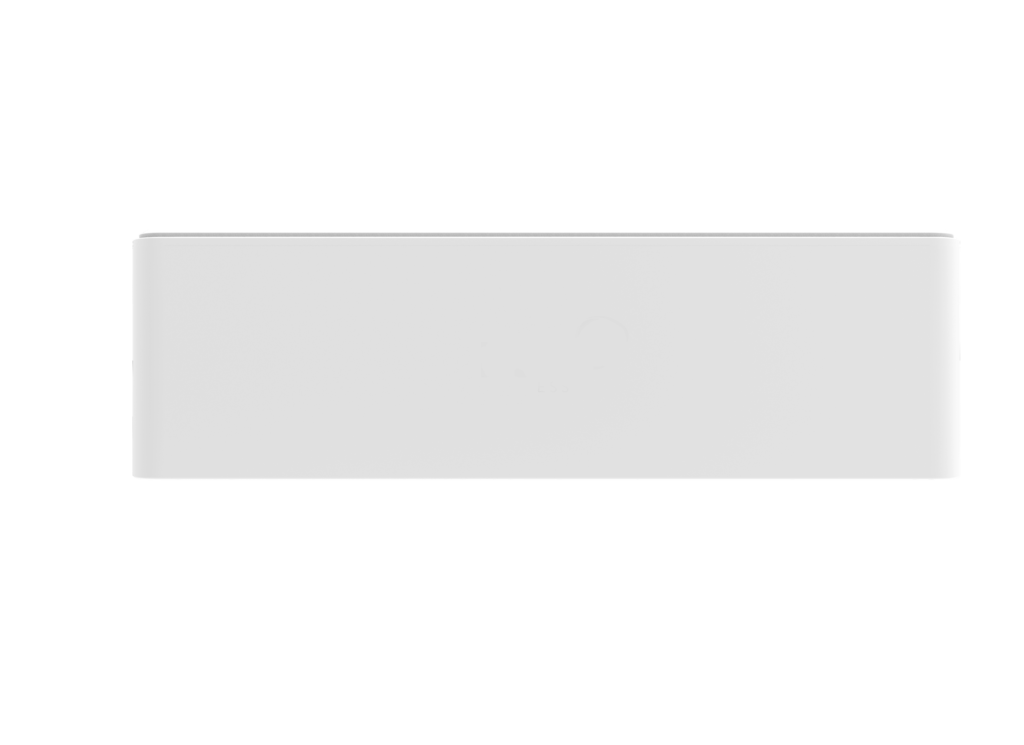
- CQ7-M (master): a 6.96 kWh battery module that also contains the controller for the entire system. Each stack has exactly one, and it weighs about 55 kg.
- CQ7-S: 6.96 kWh battery modules, about 50.5 kg each. A stack takes between one and 13 of them.
FOXESS names a stack by its total number of modules, so a CQ7-L4 is one CQ7-M plus three CQ7-S (27.84 kWh), and a CQ7-L6 is one CQ7-M plus five CQ7-S (41.76 kWh). The largest is the L14, at 97.44 kWh. The modules stack upward on a 660 by 360 mm footprint and talk to the inverter over CAN. FOXESS rates the CQ7 at 100% depth of discharge, so its nominal and usable capacities are the same: a 27.84 kWh stack has 27.84 kWh to use.
27.84 vs 41.76 kWh: the two stacks we install
| 27.84 kWh (CQ7-L4) | 41.76 kWh (CQ7-L6) | |
|---|---|---|
| Modules | 1 CQ7-M + 3 CQ7-S | 1 CQ7-M + 5 CQ7-S |
| Usable energy | 27.84 kWh | 41.76 kWh |
| Nominal voltage | 230.4 V | 345.6 V |
| Battery nominal power | 18.43 kW | 27.65 kW |
| Height | About 730 mm | About 1,040 mm |
| Weight | About 207 kg | About 308 kg |
| Footprint | 660 × 360 mm | 660 × 360 mm |
| Warranty throughput limit | 141.53 MWh | 212.24 MWh |
| Inverters in our packages | H1 G2, KH8, KH9.9; H3 Smart 5, 9.9 and 15 kW | H1 G2, KH8, KH9.9; H3 Smart 9.9 and 15 kW |
Both stacks share the CQ7’s other ratings: LFP cells, round-trip efficiency above 95% (tested at 0.3C and 25 °C), natural convection cooling, a fire protection function, and certification to IEC 62619 and UN38.3.
The battery’s nominal power is not what reaches your home. The inverter sets that limit, so on a 5 kW H1 G2 either stack supplies the house at up to 5 kW; the bigger stack simply keeps going for longer.
Which FOXESS inverters the CQ7 pairs with
Each inverter takes one CQ7 stack, and FOXESS’s compatibility list sets the size limits: up to six modules (41.76 kWh) on the single-phase H1 G2 and KH series, and up to 12 modules (83.52 kWh) on the three-phase H3 Smart. The inverters’ battery ports differ too: 80 to 480 V on the H1 G2, 85 to 480 V on the KH and 100 to 800 V on the H3 Smart.
Our guides to the FOXESS H1 G2 inverter and the FOXESS H3 Smart three-phase inverter cover the inverter side, and the FOXESS battery systems guide maps every combination we sell.
Where a CQ7 can be installed
FOXESS rates the CQ7 IP65 and lists its installation location as “Outdoor / Indoor (Stand)”. Its manual is more cautious: it says the battery should be protected from direct sunlight, rain and snow accumulation, recommends a shelter such as a rain canopy, and asks for at least 300 mm of clearance around the battery pack, a hard, level floor and good ventilation. In practice that means a garage, a carport or a sheltered side wall.
Temperature matters too. The standard CQ7 charges between 0 and 55 °C and discharges between −10 and 55 °C; optional warm-up (w) versions charge and discharge from −25 °C. Australian installation rules under AS/NZS 5139 add their own limits on where a battery can go, and we check every site against them before we quote.
What the CQ7 warranty covers
FOXESS’s Australian battery warranty covers the CQ7 for 10 years: 120 months from installation, but no more than 125 months from manufacture. It guarantees the battery keeps at least 70% of its nominal energy for that period or until it has delivered a set energy throughput, whichever comes first: 141.53 MWh for the four-module stack and 212.24 MWh for the six-module stack.
- Registration: the battery must be registered with FOXESS within 36 months of installation (FOXESS recommends within six weeks) and connected to FOXESS’s online platform when it is commissioned.
- Installer: it must be installed by an accredited installer; a non-accredited installation is not covered.
- Environment: the ambient temperature must stay between −10 and 50 °C, with adequate ventilation.
We add our own 5-year workmanship warranty on top of FOXESS’s cover and your rights under the Australian Consumer Law.
Which CQ7 size suits your home?
Size the battery on your evening and overnight use first; our guide to how to size a home battery walks through it. Then:
- Choose 27.84 kWh if it covers your evening and overnight use with some margin, or if your roof can only take a modest array. It pairs with every FOXESS inverter we install.
- Choose 41.76 kWh if your evening use is high (electric heating, an EV charged overnight, a large household) or you want more hours of cover in a blackout, and your roof can make enough surplus solar to fill it.
The bigger stack is about evening and outage cover, not a bigger rebate. The federal battery discount is calculated on usable capacity and, from 1 May 2026, is tiered, so each extra kWh above the tier thresholds earns less; we explain the arithmetic in why a bigger battery doesn’t mean a bigger rebate.
Starting points include the FOXESS H1 G2 5 kW system with 27.84 kWh, the H1 G2 5 kW system with 41.76 kWh, the H3 Smart 9.9 kW three-phase system with 27.84 kWh and the H3 Smart 9.9 kW system with 41.76 kWh. If you already know the size you want, Build Your System lets you pick the battery capacity and inverter directly.
Frequently asked questions
Is the FOXESS CQ7 100% usable?
Yes. FOXESS rates the CQ7 at 100% depth of discharge, so its usable capacity equals its nominal capacity: 6.96 kWh per module, 27.84 kWh for a four-module stack and 41.76 kWh for six. Usable capacity is also the figure the federal battery discount is calculated on.
How much does a FOXESS CQ7 battery weigh?
The CQ7-M master module weighs about 55 kg and each CQ7-S module about 50.5 kg, so a four-module 27.84 kWh stack weighs about 207 kg and a six-module 41.76 kWh stack about 308 kg. Both stand on a 660 by 360 mm footprint, about 730 mm and 1,040 mm tall.
Can the FOXESS CQ7 be installed outside?
It is rated IP65, and FOXESS lists its location as “Outdoor / Indoor (Stand)”. Its manual still says to protect it from direct sunlight, rain and snow, recommends a shelter such as a rain canopy, and asks for at least 300 mm of clearance around it. Australian installation rules add their own limits.
What is the FOXESS CQ7 warranty?
Ten years from installation (no more than 125 months from manufacture), guaranteeing at least 70% of nominal energy or a minimum throughput, whichever comes first: 141.53 MWh for the 27.84 kWh stack and 212.24 MWh for the 41.76 kWh stack. The battery must be registered with FOXESS within 36 months and installed by an accredited installer.
Can I add more CQ7 modules later?
The stack is modular, so modules can be added up to the inverter’s limit: six modules on the H1 G2 and KH, 12 on the H3 Smart. FOXESS’s manual asks for each module’s state of charge to be within 5% of the others when one is added. Rebate rules change, so talk to us before planning on it.
Sources: FOXESS CQ7 datasheet (AU) · FOXESS CQ7 user manual · FOXESS CQ7 inverter compatibility list · FOXESS battery warranty (AU) · FOXESS H1 G2 datasheet (AU) · FOXESS KH datasheet (AU) · FOXESS H3 Smart datasheet (AU) · Clean Energy Regulator — Cheaper Home Batteries Program · Clean Energy Council — approved batteries · WhySolar — CEC listing for the FOXESS CQ7 (secondary)
Every figure on this page is checked against its primary source before publication. If a datasheet, warranty or program changes, this page is updated and the verification date above moves with it.
27.84 or 41.76 kWh? Let your usage decide
Build Your System asks about your existing solar, your phase, your bill and your backup needs, then recommends a battery and inverter sized to the answers, with indicative pricing.