
Product Guides
FOXESS vs GoodWe: comparing two home battery systems
FOXESS and GoodWe are the two battery brands in our packages, and they solve the same problem in different ways. FOXESS pairs a separate hybrid inverter with a CQ7 battery stack. GoodWe’s ESA builds the inverter, the backup switching and the battery into one unit. Here is how they compare, point by point, and which homes each one suits.
Published 15 July 2026 · Facts last verified 7 October 2026
Quick answer: choose the GoodWe ESA if whole-home backup and a single tidy unit matter most: it has a built-in 63 A bypass, switches in under 4 ms and is rated IP66. Choose FOXESS if you want more inverter sizes to match your roof, from 5 kW single-phase to 15 kW three-phase, battery modules that are 100% usable, or room to grow to very large three-phase storage. Both are on the Clean Energy Council’s approved lists and both carry 10-year warranties.
The core difference: separate or all-in-one
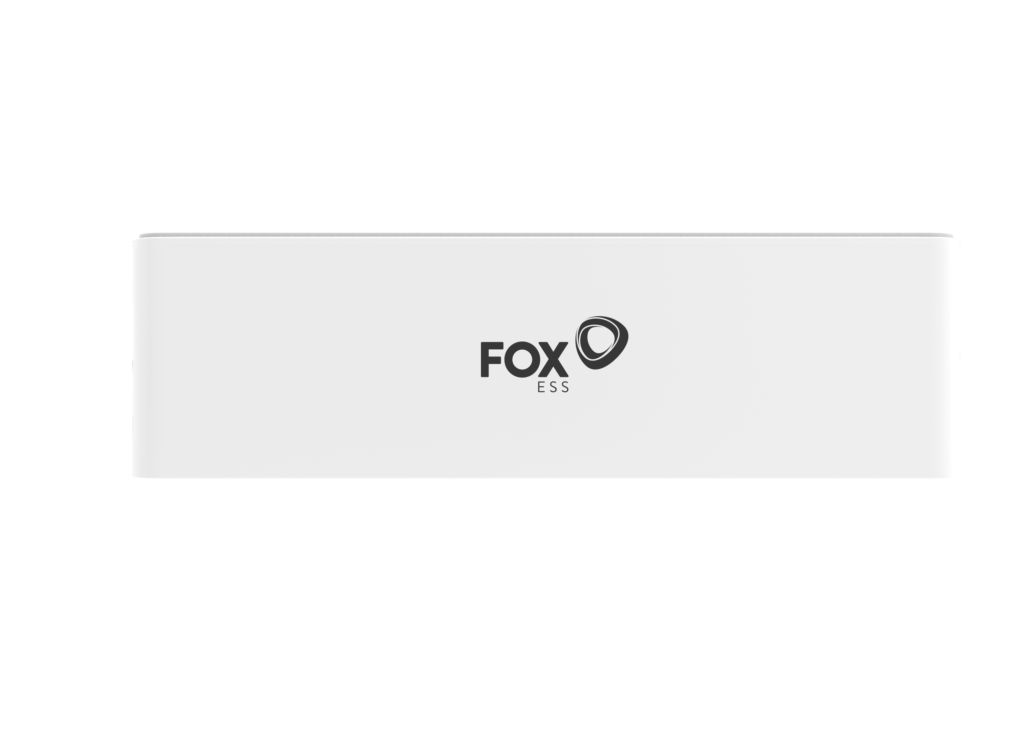
A FOXESS system is two products that work as one. The hybrid inverter mounts on the wall, and the CQ7 battery stands beside it as a stack: one CQ7-M master module, which contains the controller for the whole stack, plus CQ7-S modules.
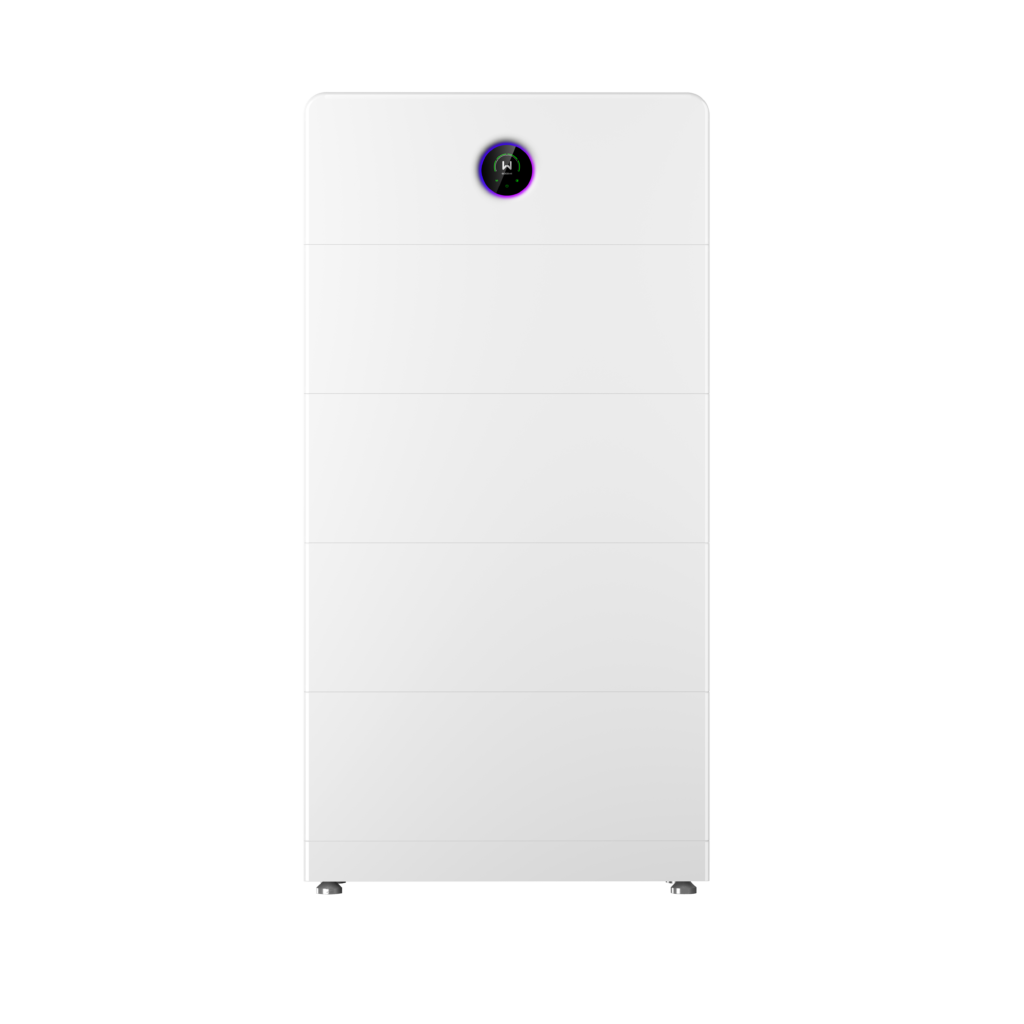
The GoodWe ESA is one product. The inverter is the top module of the stack, the battery modules sit underneath on a shared base, and the switching for whole-home backup is built in.
FOXESS vs GoodWe side by side
| FOXESS | GoodWe ESA | |
|---|---|---|
| Design | Hybrid inverter plus CQ7 battery stack | Inverter on top of the battery stack, one unit |
| Single-phase inverters we install | 5 kW (H1 G2), 8 kW (KH8), 9.9 kW (KH9.9) | 9.999 kW |
| Three-phase inverters we install | 5, 9.9 and 15 kW (H3 Smart) | 9.999 and 15 kW |
| Battery module | 6.96 kWh, all of it usable | 8.32 kWh rated, 8.0 kWh usable |
| Our package sizes | 27.84 kWh or 41.76 kWh | 16, 24, 32, 40 or 48 kWh |
| Largest battery in our packages | 41.76 kWh | 48 kWh |
| Solar inputs (MPPTs) | 2 (H1 G2), 3 (KH8, H3 Smart), 4 (KH9.9) | 4 |
| Maximum solar | About 200% of the AC rating (220% on the H3 5 kW) | 200% of the AC rating |
| Backup | Backup output to a dedicated circuit; whole-home takes extra switching equipment | Whole-home through a built-in 63 A bypass |
| Backup switching time | Under 10 ms (KH), under 20 ms (H1 G2, H3 Smart) | Under 4 ms |
| Weather rating | IP65 | IP66 |
| App | FoxCloud 2.0 | SEMS+ |
| Warranty | 10 years on the inverter and the battery | 10 years on the unit and the battery |
Inverter range: FOXESS fits more roof sizes
FOXESS has the wider range. On single-phase supply you can start with the 5 kW H1 G2, which suits a modest roof with up to 10 kW of panels, or step up to the KH8 or KH9.9. On three-phase, the H3 Smart comes in 5, 9.9 and 15 kW. GoodWe’s ESA comes in 9.999 kW, single or three phase, and 15 kW three-phase. If your roof only justifies a small array, the smaller FOXESS inverters avoid paying for capacity you won’t use.
On solar inputs, GoodWe is generous: four MPPTs on every ESA, so panels on four roof faces each run at their own best point. FOXESS has two on the H1 G2, three on the KH8 and H3 Smart and four on the KH9.9.
Battery: different module sizes, the same chemistry
Both use lithium iron phosphate (LFP) cells. FOXESS counts its CQ7 modules at 6.96 kWh with 100% depth of discharge, so the 27.84 kWh package (four modules) gives 27.84 kWh usable. GoodWe’s modules are 8.32 kWh rated and 8.0 kWh usable, and our packages run from two modules (16 kWh) to six (48 kWh) in 8 kWh steps.
That finer stepping is useful if your evening usage sits between sizes. For very large storage on three-phase supply, the FOXESS H3 Smart accepts a CQ7 stack of up to 83.52 kWh. Size the battery on your evening and overnight use first, though, because a bigger battery doesn’t earn a proportionally bigger rebate: we explain why a bigger battery doesn’t mean a bigger rebate and how to size a home battery.
Backup: GoodWe’s clearest advantage
If a blackout is the main reason you want a battery, this is the deciding row. The GoodWe ESA carries the whole switchboard through an internal 63 A bypass and switches in under 4 milliseconds, with 10 kVA of backup output on the 9.999 kW units and 15 kVA on the 15 kW unit.
A FOXESS inverter supplies backup through its EPS (emergency power supply) output, which is wired to the circuits you choose: lights, fridge, internet and a few power points, typically. Backing up the whole house on FOXESS takes extra switching equipment, which adds to the wall space and the cost. The KH series switches in under 10 ms, the H1 G2 and H3 Smart in under 20 ms.
Installation and weather
Both can live outside in a sheltered spot. The GoodWe ESA is rated IP66 and FOXESS’s inverters and CQ7 battery IP65, and both makers recommend keeping the units out of direct sun and rain. The ESA’s footprint is 800 mm wide by 270 mm deep, growing upward with each module. A FOXESS CQ7 stack has a 660 by 360 mm footprint, and the inverter takes separate wall space beside it. Australian installation rules apply to both: no living areas, and set clearances from doors, windows and exits.
Monitoring, VPPs and rebates
FOXESS systems report to the FoxCloud 2.0 app and GoodWe’s to SEMS+. Both show solar, battery, grid and household use and let you set how the battery runs.
Both brands’ batteries are on the Clean Energy Council’s approved list, so both qualify for the federal battery discount, which is worked out on usable capacity. The current rate and tiers are in our federal battery rebate guide. Both are also capable of joining virtual power plants, which the discount requires, though which retailers’ programs accept which models changes often. Our VPP explainer covers what to check.
Warranties
Both give 10 years. FOXESS covers its inverters for 10 years from installation and its CQ7 battery for 10 years, guaranteeing 70% of nominal energy or a throughput limit, whichever comes first. GoodWe covers the ESA unit and the battery modules for 10 years, guaranteeing at least 70% of usable energy or a throughput limit. Read the conditions on either: both require a qualified installer, and FOXESS asks for the battery to be registered.
Which should you choose?
Choose GoodWe ESA if you want whole-home backup without extra hardware, a single unit on the wall, four solar inputs on a single-phase home, or storage in 8 kWh steps between 16 and 48 kWh.
Choose FOXESS if your roof suits a 5 kW or 8 kW single-phase inverter, you only need backup for essential circuits, you want every kWh of the battery usable, or you’re on three-phase supply and want room for a very large battery.
Not sure which supply you have? Start with single phase vs three phase, because it narrows the choice on both brands.
Our FOXESS and GoodWe packages
Popular FOXESS starting points are the FOXESS 5 kW single-phase system with 27.84 kWh, the 8 kW single-phase system and the 9.9 kW three-phase system. On GoodWe, the 9.99 kW single-phase system with 16 kWh, the single-phase system with 32 kWh and the 15 kW three-phase system. Every size is on our solar and battery packages page.
Frequently asked questions
Is FOXESS or GoodWe better?
Neither is better across the board. GoodWe’s ESA leads on whole-home backup, switching speed and weather rating. FOXESS leads on inverter choice, fully usable battery capacity and maximum three-phase storage. The right one depends on your roof, your supply and how much backup you want.
Which has better blackout backup?
The GoodWe ESA. It backs up the whole switchboard through a built-in 63 A bypass and switches in under 4 ms. FOXESS backs up chosen circuits as standard and needs extra switching equipment for the whole house.
Can I add more batteries later?
Yes, on both, within each maker’s limits. FOXESS adds CQ7 modules to the stack; GoodWe adds 8 kWh modules to the column. Talk to us before you plan on it, because module versions and rebate rules both change.
Do both qualify for the federal battery discount?
Yes. Both are on the Clean Energy Council’s approved list. The discount is based on usable capacity and is tiered by size.
Can either be installed outside?
Both can, in a sheltered position. GoodWe’s ESA is rated IP66 and FOXESS’s equipment IP65, and both makers recommend shade and shelter from rain.
Related guides: FOXESS battery systems explained · all-in-one or separate inverter and battery · FoxCloud and SEMS+ compared
Sources: FOXESS H1 G2 datasheet (AU) · FOXESS KH datasheet (AU) · FOXESS H3 Smart datasheet (AU) · FOXESS CQ7 datasheet (AU) · FOXESS battery warranty (AU) · GoodWe ESA single-phase datasheet (AU) · GoodWe ESA three-phase datasheet (AU) · GoodWe ESA warranty (AU/NZ) · Clean Energy Council — approved batteries
Every figure on this page is checked against its primary source before publication. If a datasheet, warranty or program changes, this page is updated and the verification date above moves with it.
Let your answers pick the brand
Build Your System asks about your usage, your roof, your phase and your backup needs, then recommends FOXESS or GoodWe systems sized to the answers, with indicative pricing.