
Product Guides
FOXESS KH8 vs KH9.9: choosing a single-phase FOXESS hybrid
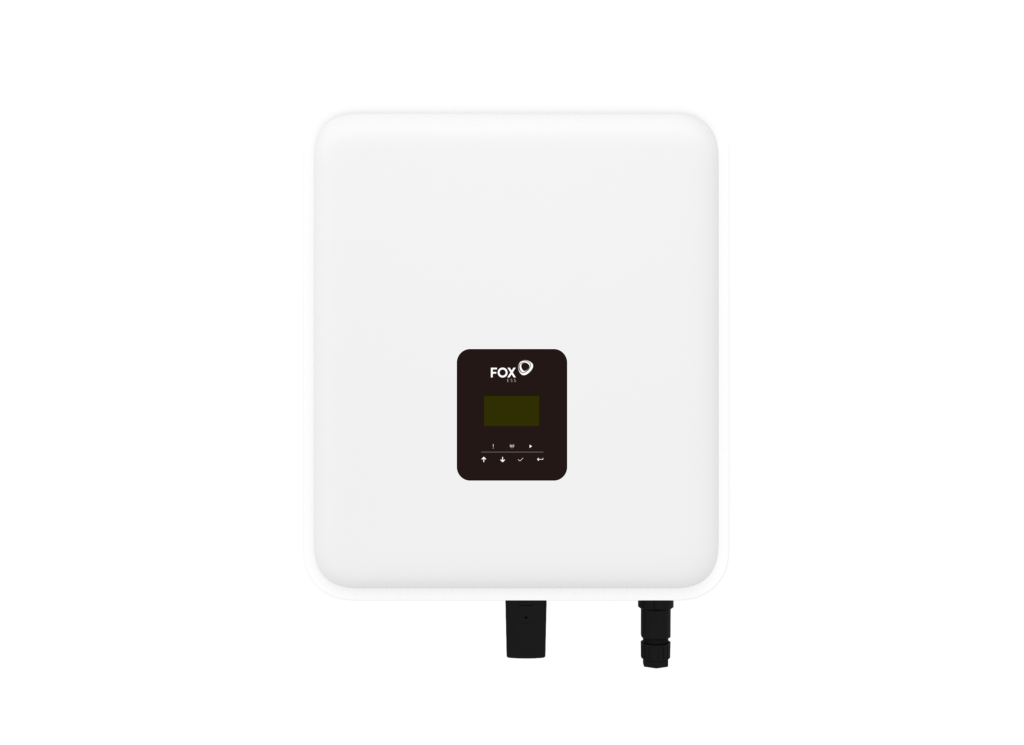
The KH8 and KH9.9 are FOXESS’s larger single-phase hybrid inverters, and on paper they look alike. The differences that matter are a fourth solar input, how many panels each can run and how much backup each can supply. Here they are side by side, with a way to tell which one your home needs.
Published 28 July 2026 · Facts last verified 7 October 2026
Quick answer: choose the FOXESS KH8 if your panels fit within 16 kWp on up to three roof faces and 8 kVA of backup covers your essentials. Choose the KH9.9 if you want up to 20 kWp of panels, a fourth MPPT for a fourth roof face, or more headroom for heavy daytime loads such as a future EV charger. Both are single-phase, switch to backup in under 10 ms and pair with a 27.84 or 41.76 kWh CQ7 battery.
Both inverters belong to FOXESS’s KH series, which runs from 7 kW to 10.5 kW. We install two of them: the FOXESS KH8 (8 kW) and the KH9.9 (9.9 kW). They share a case, a battery port and the same efficiency, so the choice comes down to your roof, your loads and what your network allows.
FOXESS KH8 vs KH9.9 side by side
All figures are from FOXESS’s Australian KH datasheet.
| KH8 | KH9.9 | |
|---|---|---|
| Nominal AC output | 8,000 W | 9,900 W |
| Maximum apparent AC power | 8,800 VA | 9,900 VA |
| Maximum solar array | 16,000 Wp (200%) | 20,000 Wp (about 202%) |
| Maximum PV input power | 12,000 W | 15,000 W |
| Solar inputs (MPPTs), one string each | 3 | 4 |
| Input current per MPPT | 16 A | 16 A |
| PV voltage | 80–500 V operating, 600 V maximum | 80–500 V operating, 600 V maximum |
| Backup (EPS) output | 8,000 VA | 9,900 VA |
| Backup peak for 60 seconds | 10,000 W | 12,000 W |
| Backup switchover | Under 10 ms | Under 10 ms |
| Maximum AC input from the grid | 16,000 VA | 18,000 VA |
| Battery port | 85–480 V, 50 A | 85–480 V, 50 A |
| Efficiency (maximum / European) | 97.80% / 97.40% | 97.80% / 97.40% |
| Size, weight, rating | 450 × 527 × 208 mm, about 29 kg, IP65 | 450 × 527 × 208 mm, about 29 kg, IP65 |
Everything else is shared too: arc-fault detection (AFCI) is optional on both, both report to FoxCloud 2.0 over Wi-Fi with 4G as an option, and FOXESS covers both for 10 years. The maximum solar array is FOXESS’s ceiling, and the full figure is usable only when a battery is part of the system; without one, Australian guidelines hold the array to about 133% of the inverter’s rating.
When the KH9.9’s fourth MPPT and bigger array matter
Each MPPT (maximum power point tracker) runs one string of panels at its own best operating point, so the number of inputs sets how many roof orientations the inverter handles well. The KH8’s inputs cover a typical north, east and west layout. The KH9.9’s fourth input earns its place when:
- The roof has four usable faces, or a partly shaded section that is better on a string of its own.
- You want more than 16 kWp of panels. The KH9.9 accepts up to 20 kWp and 15 kW of PV input, against the KH8’s 16 kWp and 12 kW.
- You are planning an EV or another big daytime load. A bigger array and inverter leave more solar for charging a car while the battery still fills.
If your roof only has room for about 12 kWp across two or three faces, you would be paying for capacity the roof can’t use, and the KH8 is the better match. Our guide to what an MPPT does explains orientation, shading and string limits in more detail.
Backup output and big loads
Both models back up a dedicated circuit through their EPS (emergency power supply) output and switch over in under 10 ms, the quickest switchover in our FOXESS range. The KH8 supplies 8 kVA, with a 10 kW peak for 60 seconds; the KH9.9 supplies 9.9 kVA, with a 12 kW peak. The peak matters for appliances that draw a surge as they start, such as a fridge compressor, a pump or an air conditioner.
That is enough for more than the bare essentials on either model, but neither backs up the whole switchboard on its own. FOXESS requires the EPS output to feed a dedicated load circuit in Australia; whole-home backup takes extra switching equipment. Plan the backed-up circuit around what you want running at once, and keep it under the model’s backup rating.
Single-phase network limits
A bigger inverter doesn’t raise how much you can send to the grid. On single-phase connections, Victoria’s distributors (CitiPower, Powercor, United Energy, Jemena and AusNet) commonly cap export at 5 kW, and each sets its own rules for how much inverter capacity it will connect at an address. Those rules differ between networks and change over time: Powercor, for example, revised its connection thresholds from 1 July 2026. We check your network’s current rules and apply for the connection before installation.
So the KH9.9’s extra output earns its keep inside the home: running daytime loads directly from the panels and filling the battery from a bigger array, rather than exporting more.
KH8 or KH9.9: which should you choose?
Choose the KH8 if your array will be up to 16 kWp on one to three orientations, 8 kVA of backup covers what you want on during a blackout, and you don’t expect heavy new daytime loads.
Choose the KH9.9 if your roof has four usable faces, you want 16 to 20 kWp of panels, or you are planning an EV, a pool pump or electric heating that will lift daytime use.
Consider the smaller H1 G2 if your roof only takes about 10 kWp on two faces: see the FOXESS H1 G2 guide. For matching inverter size to roof, loads and network in general, see what size inverter you need.
Our KH8 and KH9.9 packages
Both models pair with FOXESS’s CQ7 battery. FOXESS’s compatibility list allows stacks of up to six modules on the KH series, and we install four-module (27.84 kWh) and six-module (41.76 kWh) stacks, all of it usable:
- FOXESS KH8 8 kW system with 27.84 kWh
- KH8 8 kW system with 41.76 kWh
- FOXESS KH9.9 system with 27.84 kWh
- KH9.9 system with 41.76 kWh
Each includes the inverter, the CQ7 stack and a backed-up circuit; panels are quoted after a site assessment. The FOXESS battery systems guide shows where these sit in the full FOXESS range, and Build Your System recommends a size from your bill, your phase and your backup needs.
Frequently asked questions
What is the difference between the FOXESS KH8 and KH9.9?
The KH9.9 has a fourth MPPT, takes up to 20 kWp of panels instead of 16 kWp, puts out 9.9 kW instead of 8 kW, and supplies 9.9 kVA of backup with a 12 kW peak instead of 8 kVA and 10 kW. Both are single-phase, share the same case and battery port, and switch to backup in under 10 ms.
How many MPPTs does the FOXESS KH8 have?
The KH8 has three MPPTs, each taking one string of panels at up to 16 A, so it suits roofs with up to three orientations. Its strings can run up to 600 V, with an operating range of 80 to 500 V. The KH9.9 adds a fourth input for a fourth roof face.
Can a single-phase home have a 9.9 kW inverter?
Often, but it is your distributor’s decision. CitiPower, Powercor, United Energy, Jemena and AusNet each set how much inverter capacity they will connect on a single-phase supply and how much you can export, commonly 5 kW. We check the rules for your address and apply for approval before installation.
Do the KH8 and KH9.9 work with existing solar panels?
Yes. The Australian KH ships with two CTs: CT1 for the KH itself at the grid connection and CT2 for an existing grid-tied inverter, if there is one. That lets a KH add a battery beside an older solar system, or replace an old inverter and take over its panels. We check the existing system before recommending either route.
Sources: FOXESS KH datasheet (AU) · FOXESS KH user manual · FOXESS Australia support — EPS wiring FAQ · FOXESS inverter warranty (AU) · FOXESS CQ7 datasheet (AU) · FOXESS CQ7 inverter compatibility list · Clean Energy Council — Guidelines for grid-connected solar PV systems (no storage), version 14 · United Energy — solar connection process · Powercor — model standing offer threshold changes · AusNet — connections up to 30 kW
Every figure on this page is checked against its primary source before publication. If a datasheet or a network rule changes, this page is updated and the verification date above moves with it.
Not sure if your roof needs the fourth input?
Build Your System asks about your existing solar, your phase, your bill and your backup needs, then recommends an inverter and battery sized to the answers, with indicative pricing.