
Solar & Battery Guides
What is a hybrid inverter?
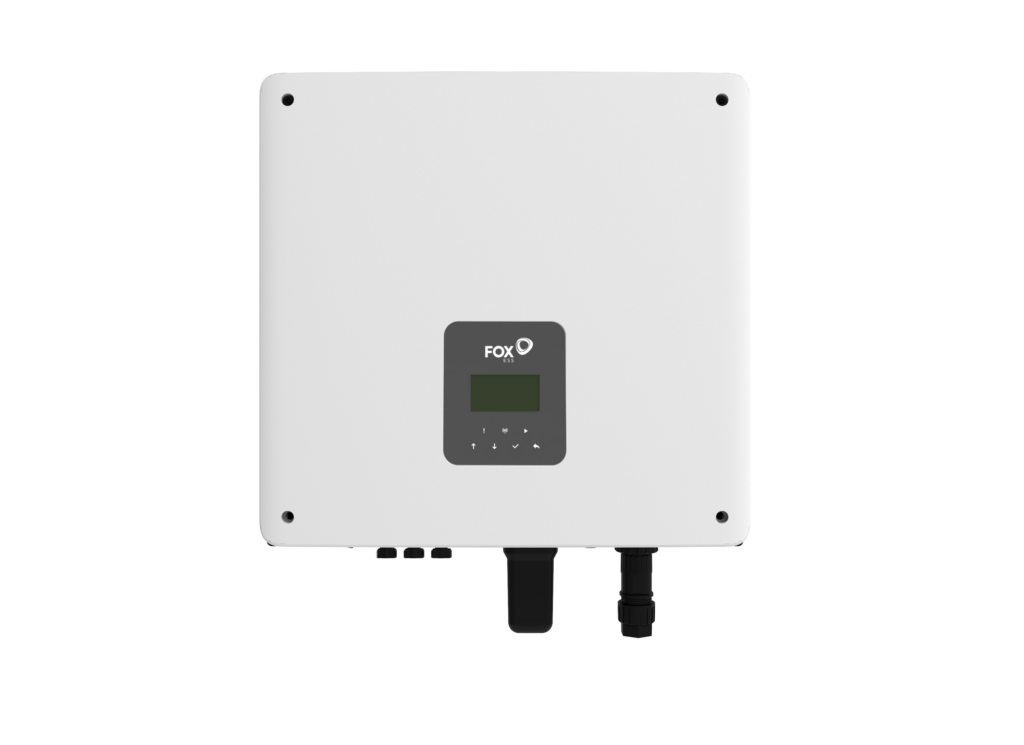
A hybrid inverter runs your solar panels and your home battery from one box. It turns solar power into household power, charges and discharges the battery and, when it is wired for it, keeps power on through a blackout. Here is how it works, how it differs from an ordinary solar inverter and how to read the extra lines on its spec sheet.
Published 27 January 2026 · Facts last verified 7 October 2026
Quick answer: a hybrid inverter is a solar inverter and a battery inverter in one box. It converts the direct current (DC) from your panels into the alternating current (AC) your home uses, charges a battery straight from the panels, runs the house from that battery after sunset and, when wired for backup, keeps power on in a blackout. An ordinary string inverter does only the first job, and switches off when the grid goes down.
What is a hybrid inverter doing that a solar-only inverter isn’t? Managing three sources of power at once: the panels, the battery and the grid. Through the day it decides whether solar goes to the house, the battery or the grid; in the evening, whether the battery or the grid supplies the house. That is why a hybrid’s spec sheet has more lines on it, explained below with real figures from the FOXESS and GoodWe hybrids we install.
What is a hybrid inverter used for?
The name comes from combining two products that used to be separate: a solar inverter and a battery inverter. A hybrid does five jobs:
- Solar conversion. Like any solar inverter, it converts DC from the panels into AC for the house and the grid.
- Battery charging. Surplus solar goes into the battery on the DC side, without first becoming AC. FOXESS rates the H1-5.0-E-G2’s solar-to-battery efficiency at up to 98.5%.
- Battery discharging. When the panels can’t cover the house, the battery takes over. The H1 G2 converts battery power to AC at up to 97.0% efficiency, and the GoodWe ESA at up to 97.8%.
- Grid exchange. It exports what you can’t use or store, within your network’s export limit, and imports when solar and battery fall short.
- Backup. When the grid fails, it can disconnect from it and keep supplying a backed-up circuit, or the whole house on systems built for that.
DC-coupled vs AC-coupled batteries
Where the battery connects decides how many times your solar energy is converted before you use it.
DC-coupled is the hybrid arrangement. The panels and the battery share one inverter, solar charges the battery directly, and the energy becomes AC once, on its way out of the battery. The US Department of Energy puts the choice simply: solar can charge a battery directly over DC or after a conversion to AC.
AC-coupled means the panels and the battery each have their own inverter. Solar becomes AC in the solar inverter, DC again to charge the battery, then AC once more when the battery discharges. The Australian Government’s Your Home guide counts those three conversions and calls AC-coupled charging slightly less efficient, but notes it can be simpler to install where solar is already in place.
In practice the line blurs. A hybrid can also run beside an existing solar inverter: the FOXESS H1 G2 comes with a second current sensor for exactly that case, so the old inverter keeps running its panels while the hybrid manages the battery. Which route suits your home is covered in adding a battery to existing solar.
Hybrid inverter vs string inverter
A string inverter, also called a grid-tie or solar-only inverter, takes power from strings of panels and feeds it to the house and the grid. It has no battery port and no backup output.
| String (solar-only) inverter | Hybrid inverter | |
|---|---|---|
| Converts solar DC to AC | Yes | Yes |
| Battery port | No; a battery needs its own inverter | Yes, built in |
| How solar charges a battery | Through a separate battery inverter (AC-coupled) | Directly, on the DC side |
| In a blackout | Switches off | Can supply a backed-up circuit or the whole house, if wired for it |
| Panel limit | About 133% of the AC rating | About 133% without a battery; with one, up to the maker’s limit (200% or a little more on the hybrids we install) |
| Extra ratings to check | None beyond solar and AC | Battery port, backup output, switchover time |
The blackout row matters most. Grid-connected inverters have anti-islanding protection (GoodWe lists it on the ESA’s datasheet), which stops them feeding the grid when it fails, so a solar-only inverter simply switches off. A hybrid can disconnect and keep running, but Your Home notes that a grid-connected battery only provides backup if it is set up to do so. In practice that means wiring the switchboard for a backed-up circuit or for the whole house.
How to read a hybrid inverter spec sheet
A hybrid adds a battery port and a backup output to the usual solar and AC ratings, each with its own limits. The key lines for two FOXESS hybrids and GoodWe’s integrated unit:
| Spec sheet line | FOXESS H1-5.0-E-G2 | FOXESS KH8 | GoodWe GW9.999K-EHA-G20 |
|---|---|---|---|
| Maximum solar array / input | 10 kWp / 7.5 kW | 16 kWp / 12 kW | 20 kW input |
| Solar inputs (MPPTs) | 2 | 3 | 4 |
| Rated AC output | 5 kW | 8 kW | 9.999 kW |
| Most it draws from the grid | 10 kVA | 16 kVA | 14.5 kVA |
| Battery port | 80–480 V, 40 A | 85–480 V, 50 A | 350–550 V; 13.5 kW charge, 11.0 kW discharge |
| Backup output | 5 kVA (6 kVA for 60 s) | 8 kVA (10 kW for 60 s) | 10 kVA (20 kVA for 10 s) |
| Switchover to backup | Under 20 ms | Under 10 ms | Under 4 ms |
- Solar array and solar input. The array figure is the most panel capacity the maker allows; the input figure is how much solar power the inverter can take in at any moment. The H1 G2 accepts 10 kWp of panels but takes in at most 7.5 kW at once. Why that works is covered in solar panel oversizing explained.
- MPPTs. Independent solar inputs, each holding its own string of panels at its best operating point, ideally one per roof face. See what an MPPT is and how many you need.
- Rated AC output. The continuous AC power the inverter can supply to the house and the grid together. Your distributor sets a separate export limit.
- Grid input. The most the inverter can draw from the grid through its own terminals, which matters when it charges the battery from the grid.
- Battery port. The battery’s voltage has to sit inside this window, and the current or power limit sets how fast it charges and discharges.
- Backup output. The continuous power available in a blackout, plus a short surge allowance for motors starting: 60 seconds on the FOXESS units, 10 seconds on the ESA.
- Switchover. How long the backup output takes to come on after the grid drops.
One requirement isn’t on the spec sheet: the inverter must be on the Clean Energy Council’s approved list, which networks and government programs rely on. All three above are listed. The H1 G2 is the inverter in our FOXESS H1 G2 5 kW package, and the KH8 in the FOXESS KH8 8 kW package.
The all-in-one version: GoodWe ESA
GoodWe’s ESA builds the hybrid inverter into the battery. The inverter, a GW9.999K-EHA-G20 on single-phase supply, is the top module of a stack, and the battery modules sit beneath it; each GW8.3-BAT-D-G21 holds 8.32 kWh rated and 8.0 kWh usable. It does every job described above, with four MPPTs, 20 kW of solar input and a 10 kVA backup output. The difference is its blackout design: a built-in 63 A bypass lets the whole switchboard stay on in an outage without a separate gateway, switching over in under 4 ms. Our GoodWe ESA guide covers it in detail, and the 9.99 kW single-phase GoodWe ESA with 16 kWh is the smallest system we build on it.
Should you keep your existing inverter or replace it?
If you already have solar, a new hybrid isn’t the only route to a battery. Keeping your inverter and adding an AC-coupled battery tends to suit a newer inverter that works well and is under warranty. Replacing it with a hybrid tends to suit an older inverter, a system you plan to expand with more panels, or a home that wants the shortest path from panels to battery. Panels moved onto a new hybrid must fit its MPPT voltage and current limits, which an installer checks on site.
That is why Build Your System asks first whether you already have solar, then about your phase, your bill and backup, before it recommends a hybrid and battery to suit. To compare the options for your roof, size a system for your home.
Frequently asked questions
Does a hybrid inverter work without a battery?
Yes. Without a battery it works as a solar inverter, and a compatible battery can be added later. Until then the panel limit stays at about 133% of the inverter’s AC rating, and you shouldn’t count on backup power: FOXESS, for example, rates the H1 G2’s backup output with a battery connected.
Will a hybrid inverter keep my power on in a blackout?
Only if the system is wired for backup. A FOXESS hybrid’s backup output supplies a dedicated backed-up circuit, typically lights, the fridge and some power points. The GoodWe ESA can carry the whole switchboard through its 63 A bypass. Either way, the backup output caps what can run at once: 5 kVA on the H1 G2, 8 kVA on the KH8 and 10 kVA on the ESA.
What is the difference between a hybrid inverter and a string inverter?
A string inverter converts solar power to AC and nothing more: it has no battery port, and it switches off in a blackout. A hybrid inverter adds a battery port, charges and discharges the battery, and can supply a backup output when the grid fails. With a battery attached, a hybrid can also carry more panels, up to its maker’s limit.
Can I put my existing panels on a new hybrid inverter?
Usually, provided the strings fit the new inverter’s inputs. Each string’s voltage has to sit inside the MPPT voltage window in all weather, and its current under the per-input limit: 16 A on the FOXESS H1 G2 and KH8, 20 A on the GoodWe ESA. An installer checks the panel datasheet and string layout at the site assessment before recommending a swap.
Sources: FOXESS H1 G2 datasheet (AU) · FOXESS H1/AC1 G2 user manual (AU) · FOXESS KH datasheet (AU) · GoodWe ESA single-phase and battery module datasheet (AU) · Your Home (Australian Government) — Batteries · US Department of Energy — Inverters and grid services basics · Clean Energy Council — Guidelines for grid-connected solar PV systems (no storage), version 14 · SolarQuotes — the battery exception to the 133% limit (secondary) · Clean Energy Council — approved inverters
Every figure on this page is checked against its primary source before publication. If a datasheet or a rule changes, this page is updated and the verification date above moves with it.
Find the hybrid that fits your roof
Build Your System asks whether you already have solar, your phase, your bill and your backup needs, then recommends a hybrid inverter and battery sized to the answers, with indicative pricing.