
Product Guides
N-type TOPCon solar panels explained
TOPCon is now the most widely produced type of solar cell, and N-type TOPCon panels have replaced P-type PERC as the mainstream technology. Here is what the terms mean, what changes on a datasheet, and how three current panels from Trina, Suntech and Tindo compare figure by figure.
Published 10 April 2026 · Facts last verified 7 October 2026
Quick answer: N-type TOPCon solar panels use cells made from N-type silicon with a tunnel oxide passivated contact: an ultra-thin oxide layer and a doped silicon layer across the back of the cell that cut the energy lost where current is collected. Compared with P-type PERC panels, they avoid most early light-induced degradation, lose a little less power in heat, and several carry 30-year performance warranties.
If a quote lists N-type or TOPCon panels, it is describing the cells inside the panel, not the brand. N-type TOPCon solar panels are now the mainstream of rooftop solar, and the two terms tell you a fair amount about how a panel will age, how it copes with a hot roof and what its warranty is likely to say.
What are N-type TOPCon solar panels?
The name joins two separate ideas.
- N-type describes the silicon wafer each cell is made from. N-type wafers are doped with phosphorus. The P-type wafers behind PERC cells have traditionally been doped with boron, and that difference shows up in how a panel ages.
- TOPCon stands for tunnel oxide passivated contact. Across the back of the cell sits an ultra-thin layer of silicon oxide, topped with a layer of doped silicon. Current passes through to the metal contact, while far less energy is lost where metal meets silicon.
PERC, short for passivated emitter and rear cell, tackled the same problem an earlier way: an insulating layer on the back of the cell, opened in small spots for the contacts. It was the mainstream cell before TOPCon, and it has an Australian story, told in our history of solar power in Australia. Fraunhofer ISE, the German solar research institute, now describes TOPCon as the most widely produced cell type, with N-type TOPCon and heterojunction cells replacing P-type PERC. Brands add their own labels: Trina Solar calls its version i-TOPCon.
TOPCon vs PERC: what changes on the datasheet
The cell design shows up in three places on a datasheet: the first-year degradation, the temperature coefficient and, on some panels, a bifaciality figure.
| N-type TOPCon | P-type PERC | |
|---|---|---|
| Wafer | N-type (phosphorus-doped) | P-type (traditionally boron-doped) |
| Back of the cell | Tunnel oxide and doped silicon across the whole rear | Insulating layer, opened locally for the contacts |
| Light-induced degradation | Mostly immune | Loses some output in the first day or two of sun |
| First-year drop allowed by warranties | Typically 1%, sometimes 1.5% | Typically 2% |
| Heat | −0.29 to −0.30%/°C on the three panels below | Generally a larger loss in heat |
| Status | Most widely produced cell type | Being replaced by N-type cells |
Early degradation. P-type cells lose a little output in their first day or two of sun, an effect called light-induced degradation (LID). N-type cells are mostly immune, so their warranties typically allow a 1% first-year drop rather than 2%.
Heat. Panels are rated at a cell temperature of 25 °C, and a summer roof runs far hotter. With the cells at 60 °C, a panel at −0.29%/°C is about 10% below its rating from heat alone; at −0.35%/°C it would be about 12% below.
Rear-side output. Bifacial panels also collect light on the back, but panels mounted close to a roof get little there, so treat a bifaciality figure as a small bonus rather than a reason to choose a panel.
Warranties. The warranties reflect the difference. Suntech’s PERC panel in Australia, the Ultra V mini, carries a 25-year performance warranty; its 440 W TOPCon panel carries 30 years.
What to look for on a solar panel datasheet
- Power and tolerance. A tolerance of 0 to +5 W, as on all three panels below, means none should test below its rating.
- Efficiency. The share of sunlight turned into electricity. It decides how much power fits on a roof, so it matters most when space is tight.
- Temperature coefficient of Pmax. The power lost per degree above 25 °C. Closer to zero is better.
- Degradation. The first-year drop and the yearly rate after it, which together set the power guaranteed at the end of the warranty.
- Two warranties. The product warranty covers defects in materials and workmanship; the performance warranty guarantees a share of rated power over time. Check which models and markets each covers, and who handles claims in Australia.
- Construction. Dual-glass (glass-glass) panels replace the plastic backsheet with a second sheet of glass. Note the glass thickness and type, and the frame depth.
- Approval. The panel should be on the Clean Energy Council’s approved module list, which the Small-scale Renewable Energy Scheme and some network providers require.
Three N-type TOPCon panels compared
These three current panels show the range: a large dual-glass panel from Trina Solar, a compact bifacial panel from Suntech and a panel made in Australia by Tindo Solar. They are examples, not a stock list; we choose panels for each roof at the site assessment.
| Trina Vertex S+ 505 W | Suntech Ultra V Pro mini 440 W | Tindo Walara 475 W | |
|---|---|---|---|
| Model | TSM-505NEG18R.28 | STP440S-C54/Nshtb+ | Walara-475G4P-BL |
| Cells | 108, N-type i-TOPCon | 108 half-cut, N-type TOPCon | 120 half-cut, N-type TOPCon |
| Efficiency | 22.7% | 22.5% | 21.9% |
| Power tolerance | 0 to +5 W | 0 to +5 W | 0 to +5 W |
| Temperature coefficient (Pmax) | −0.29%/°C | −0.29%/°C | −0.30%/°C |
| Size | 1961 × 1134 × 30 mm | 1722 × 1134 × 30 mm | 1910 × 1133 × 35 mm |
| Weight | 23.5 kg | 21.0 kg | 23.5 kg |
| Glass | 1.6 mm heat-strengthened, front and back | 1.6 mm semi-tempered, front and back | 3.2 mm fully tempered, front |
| Bifacial | No (monofacial) | Yes, 80 ± 5% bifaciality | Bifacial cells; no rear rating given |
| Degradation | 1% in year one, then 0.4% a year | 1% in year one, then 0.4% a year | Not itemised |
| Performance warranty | 30 years, 87.4% at the end | 30 years, 87.4% at the end | 25 years, 87.4% at the end |
| Product warranty | 25 years (black-framed .28 on Australian and NZ rooftops) | 25 years | 25 years |
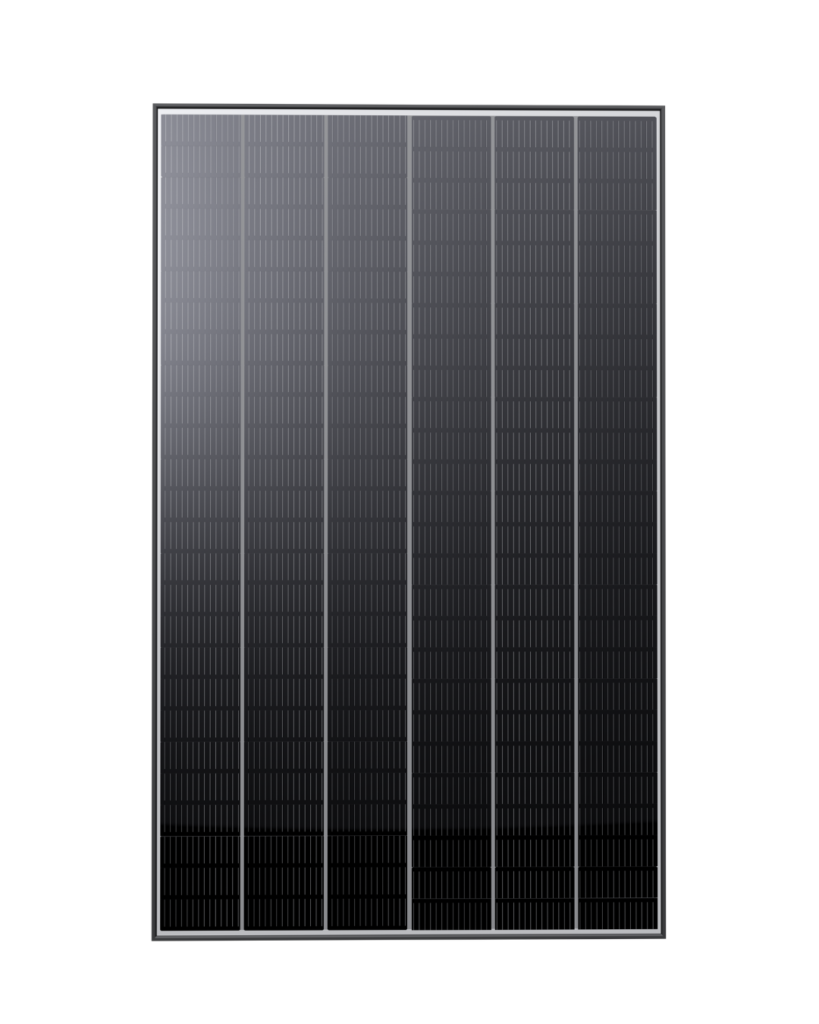
Trina Vertex S+ 505 W. The largest and most efficient of the three. It has glass front and back but is monofacial, so the second sheet is there for reliability, not rear-side output. The 25-year product warranty applies to the black-framed .28 version on Australian and New Zealand rooftops, under a supplement to Trina’s warranty; the silver-framed .20 version carries 15 years.
Suntech Ultra V Pro mini 440 W. Suntech Australia sells its 440 W TOPCon panels in this size under the Ultra V Pro mini name, in several versions; these figures are for the glass-glass bifacial version. At 1722 mm long it is the shortest of the three, which can help on small or broken-up roof faces.
Tindo Walara 475 W. Made in Australia by Tindo Solar at Mawson Lakes, South Australia. Its efficiency is slightly lower, and it guarantees 87.4% of rated power at year 25, where the other two guarantee the same figure at year 30. We cover it in detail in Australian-made solar panels: the Tindo Walara 475 W.
How the panels fit with the inverter and battery
Panel technology is one decision among several. The roof’s size, direction and shading decide how many panels fit and what they produce, and the inverter decides how many it can take. With a battery behind a hybrid inverter, the array can go well past the usual limit for systems without storage, as we explain in solar panel oversizing explained.
Efficiency matters less than it looks. About 10 kW of panels takes 20 of the Trina 505 W panels (44.5 square metres), 21 Tindo 475 W panels (45.4 square metres) or 23 Suntech 440 W panels (44.9 square metres). On most roofs, the panel size that best fits each roof face matters more than a fraction of a percentage point of efficiency.
That is why we pick panels at the site assessment and quote them with mounting and installation. If you’re adding a battery at the same time, the GoodWe ESA 9.99 kW single-phase system with 16 kWh and the GoodWe ESA 9.99 kW three-phase system with 32 kWh each accept up to 20 kW of solar across four inputs. Find out more about our rooftop solar installations, or use Build Your System to size the inverter and battery around your usage.
Frequently asked questions
Are N-type TOPCon panels better than PERC?
On the datasheet, usually yes. N-type cells are mostly immune to the light-induced degradation that costs P-type PERC panels output in their first days of sun, so warranties typically allow a 1% first-year drop instead of 2%, and TOPCon panels tend to lose less power in heat. Roof direction, shading and installation still matter more than the cell type.
Is TOPCon the same as N-type?
No. N-type describes the silicon wafer; TOPCon describes how the back of the cell is built. Mainstream TOPCon panels are built on N-type wafers, but other N-type designs exist, such as heterojunction cells. When a datasheet says N-type TOPCon, it is telling you both the wafer and the cell design.
What does i-TOPCon mean on a Trina panel?
It is Trina Solar’s name for its version of TOPCon, used on panels such as the Vertex S+ 505 W (TSM-505NEG18R.28). It is still an N-type cell with a tunnel oxide passivated contact. Compare it with other TOPCon panels on the same datasheet figures: efficiency, temperature coefficient, degradation and both warranties.
Are bifacial solar panels worth it on a house roof?
Rarely for the rear-side output alone. A bifacial panel makes extra power only from light that reaches its back, and panels mounted close to a roof get little. Bifacial panels are often glass-glass, which some buyers prefer. Judge them on front-side efficiency, temperature coefficient and warranty, as you would any other panel.
How much do TOPCon solar panels degrade?
The Trina Vertex S+ 505 W and Suntech 440 W datasheets allow 1% in the first year and 0.4% a year after that, guaranteeing 87.4% of rated power after 30 years. Tindo guarantees 87.4% after 25 years on the Walara 475 W. These are warranty floors, the most a panel may lose before you can claim, not a forecast.
Sources: Fraunhofer ISE — TOPCon, the most widely produced cell type (April 2026) · Fraunhofer ISE — Photovoltaics Report · Fraunhofer ISE — TOPCon (tunnel oxide passivated contact) cells · Trina Solar NEG18R.28 datasheet (AU) · Trina Solar — Vertex S+ · Suntech STP420-440S-C54/Nshtb+ datasheet · Suntech Australia — Ultra V Pro mini · Suntech Australia — Ultra V mini (PERC) · Tindo Walara 475 W datasheet · Clean Energy Council — approved modules · GoodWe ESA single-phase datasheet (AU) · GoodWe ESA three-phase datasheet (AU) · SolarQuotes — panel degradation and LID (secondary) · SolarQuotes — temperature coefficients (secondary)
Every figure on this page is checked against its primary source before publication. If a datasheet or warranty changes, this page is updated and the verification date above moves with it.
Match the panels and battery to your roof
Build Your System asks about your existing solar, your phase, your bill and your backup needs, then recommends a battery system with indicative pricing. We choose and quote the panels after a site assessment.