
Product Guides
FOXESS battery systems explained: H1 G2, KH, H3 Smart and CQ7
A FOXESS battery system is two products working as one: a FOXESS hybrid inverter on the wall and a CQ7 battery stack beside it. We install three FOXESS inverter families with CQ7 stacks of 27.84 or 41.76 kWh. This guide explains each part, maps every FOXESS package we sell and links to the detail on each.
Published 15 June 2026 · Facts last verified 7 October 2026
Quick answer: a FOXESS battery system pairs a FOXESS hybrid inverter with a CQ7 lithium iron phosphate (LFP) battery. For single-phase homes we install the 5 kW H1 G2 or the 8 kW and 9.9 kW KH models; for three-phase homes, the H3 Smart in 5, 9.9 or 15 kW. Every package uses a four-module 27.84 kWh or six-module 41.76 kWh CQ7 stack, all of it usable, and FOXESS warrants both the inverter and the battery for 10 years.
FOXESS is one of the two battery brands in our packages; the other is GoodWe. This page is the starting point for everything FOXESS: who makes it, how a FOXESS battery system fits together, which inverter suits which home, and what to expect from the CQ7 battery, backup, monitoring and warranty. Each section links to a detailed guide.
Who makes FOXESS?
FOXESS was founded in 2019 and is headquartered in Wenzhou, China. It makes hybrid inverters and batteries and runs the FoxCloud monitoring platform. In May 2026 it said it had opened offices in Melbourne and Sydney, with more than 30 specialists supporting Australian customers. The products we install carry FOXESS’s Australian datasheets and warranties, which are the documents every figure on this page comes from.
How a FOXESS battery system fits together
Four parts make up every FOXESS system we install:
- A hybrid inverter on the wall. It converts the panels’ DC output to AC for the house, charges and discharges the battery, and manages the grid connection.
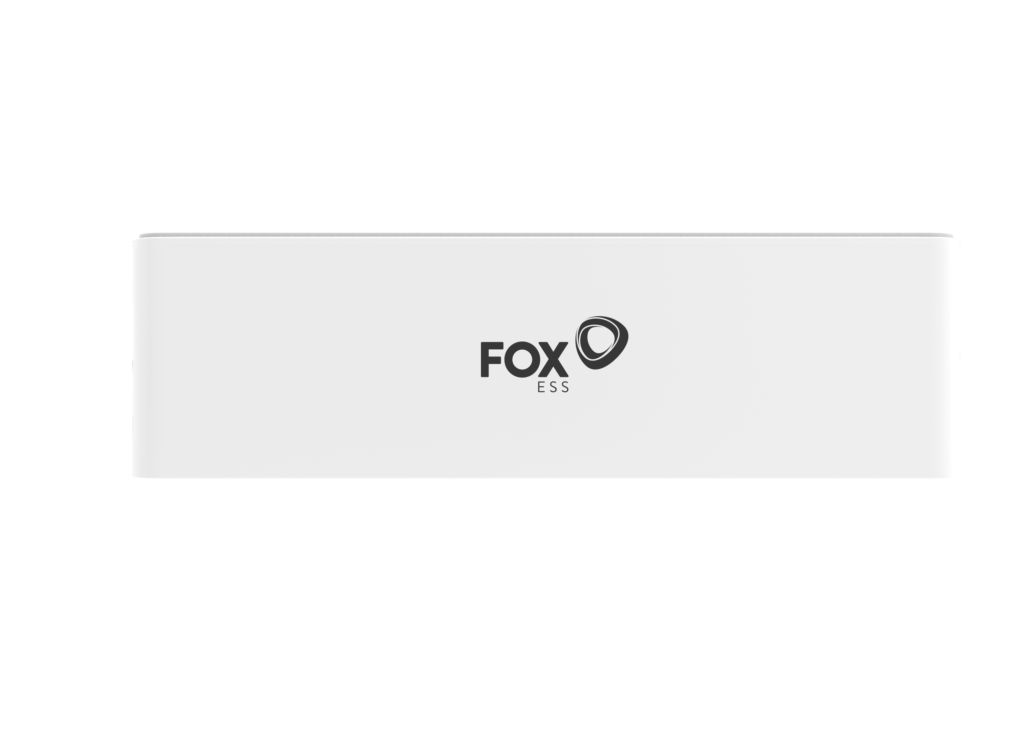
- A CQ7 battery stack standing beside it: one CQ7-M master module, which contains the controller for the whole stack, plus CQ7-S modules. Every module stores 6.96 kWh.
- Metering. The single-phase inverters come with two current transformers (CTs): one at the grid connection and one for an existing solar inverter, if you have one. Our three-phase kits use a three-phase smart meter with six CTs.
- A backed-up circuit. The inverter’s EPS (emergency power supply) output feeds a dedicated circuit that stays on in a blackout.
Solar panels and mounting are chosen and quoted after a site assessment, because the roof decides how many panels fit and where they go.
The three FOXESS inverter families
| Family | Supply | Sizes we install | Maximum solar | Solar inputs (MPPTs) | Backup output |
|---|---|---|---|---|---|
| H1 G2 | Single phase | 5 kW (H1-5.0-E-G2) | 10 kWp | 2 | 5 kVA |
| KH | Single phase | 8 kW (KH8), 9.9 kW (KH9.9) | 16 kWp, 20 kWp | 3, 4 | 8 kVA, 9.9 kVA |
| H3 Smart | Three phase | 5, 9.9 and 15 kW (H3-5.0-Smart, H3-9.9-Smart, H3-15.0-Smart) | 11, 20 and 30 kWp | 3 | EPS circuit, rated by model |
Maximum solar is FOXESS’s ceiling for each inverter. The full figure is usable when a battery is part of the system (without one, Australian guidelines hold the array to about 133% of the inverter’s rating), and the array we quote depends on your roof.
H1 G2 is the entry point for single-phase homes with a modest roof: up to 10 kWp of panels on two inputs. See the FOXESS H1 G2 guide for its full specifications.
KH8 and KH9.9 suit larger single-phase homes: more panels, a third or fourth input for more roof faces, more backup output and the quickest switchover of the FOXESS inverters we install, under 10 ms. Our KH8 vs KH9.9 comparison shows when the bigger model is worth it.
H3 Smart is FOXESS’s three-phase hybrid. The H3 Smart three-phase guide covers its metering and larger battery options. Not sure which supply you have? Our guide to single phase vs three phase explains how to check.
The CQ7 battery: 27.84 or 41.76 kWh
The CQ7 is a high-voltage stack of LFP modules. FOXESS rates it at 100% depth of discharge, so its nominal and usable capacities are the same. A stack takes one CQ7-M and between one and 13 CQ7-S modules, from 13.92 to 97.44 kWh, but each inverter has its own limit in FOXESS’s compatibility list: up to six modules on the H1 G2 and KH, and up to 12 (83.52 kWh) on the H3 Smart.
We install two sizes: four modules (27.84 kWh, about 730 mm tall) and six (41.76 kWh, about 1,040 mm), both on a 660 by 360 mm footprint. The CQ7 is rated IP65, though FOXESS’s manual recommends a sheltered spot out of direct sun and rain. It was added to the Clean Energy Council’s approved battery list on 18 May 2026. The CQ7 battery guide covers stacking, siting and which size suits which home.
Every FOXESS package we install
| Package | Inverter | Supply | Battery | Maximum solar |
|---|---|---|---|---|
| FOXESS 5 kW single phase, 27.84 kWh | H1-5.0-E-G2 | Single | 27.84 kWh (4 modules) | 10 kWp |
| FOXESS 5 kW single phase, 41.76 kWh | H1-5.0-E-G2 | Single | 41.76 kWh (6 modules) | 10 kWp |
| FOXESS 8 kW single phase, 27.84 kWh | KH8 | Single | 27.84 kWh (4 modules) | 16 kWp |
| FOXESS 8 kW single phase, 41.76 kWh | KH8 | Single | 41.76 kWh (6 modules) | 16 kWp |
| FOXESS 9.9 kW single phase, 27.84 kWh | KH9.9 | Single | 27.84 kWh (4 modules) | 20 kWp |
| FOXESS 9.9 kW single phase, 41.76 kWh | KH9.9 | Single | 41.76 kWh (6 modules) | 20 kWp |
| FOXESS 5 kW three phase, 27.84 kWh | H3-5.0-Smart | Three | 27.84 kWh (4 modules) | 11 kWp |
| FOXESS 9.9 kW three phase, 27.84 kWh | H3-9.9-Smart | Three | 27.84 kWh (4 modules) | 20 kWp |
| FOXESS 9.9 kW three phase, 41.76 kWh | H3-9.9-Smart | Three | 41.76 kWh (6 modules) | 20 kWp |
| FOXESS 15 kW three phase, 27.84 kWh | H3-15.0-Smart | Three | 27.84 kWh (4 modules) | 30 kWp |
| FOXESS 15 kW three phase, 41.76 kWh | H3-15.0-Smart | Three | 41.76 kWh (6 modules) | 30 kWp |
Every package is the inverter, the CQ7 stack and a backed-up circuit, supplied and installed. Panels and mounting are quoted after a site assessment, and the prices on our site are indicative, not quotes. You can compare them with our GoodWe systems on the solar battery packages page.
Backup, monitoring and warranty
Backup. As standard, the inverter’s EPS output supplies a dedicated backed-up circuit, typically the fridge, lights, internet and a few power points. Backing up the whole switchboard takes extra switching equipment, so if whole-home backup is the priority, tell us at the site assessment. Our guide to FOXESS backup explains how the EPS circuit works and what to put on it.
Monitoring. FOXESS systems report to FoxCloud 2.0, an app for iOS and Android with a web portal. It shows production and consumption with day, week, month and year trends and the system’s revenue.
Warranty. FOXESS covers the H1 G2, KH and H3 Smart inverters for 10 years (120 months from installation, but no more than 132 months from manufacture), with a FoxPro extension available to 20 years in total. The CQ7 is covered for 10 years to at least 70% of its nominal energy or a set energy throughput, whichever comes first, and must be registered with FOXESS within 36 months. We add our own 5-year workmanship warranty. Our guide to home battery warranties explains how throughput limits work.
Which FOXESS battery system suits your home?
- Single phase, modest roof, essentials backup: the H1 G2 with 27.84 kWh.
- Single phase, bigger roof or three or four roof faces: the KH8 or KH9.9.
- Three phase: the H3 Smart, sized to the roof: 5 kW for up to 11 kWp of panels, 9.9 kW for up to 20 kWp, 15 kW for up to 30 kWp.
- High evening use or longer outage cover: the 41.76 kWh stack, if the roof can make enough surplus solar to fill it.
- Whole-home backup in a single unit: compare GoodWe’s ESA in FOXESS vs GoodWe.
The quickest way to narrow it down is Build Your System. It asks four questions (existing solar, phase, your quarterly bill and backup), then shows one recommended system with a smaller and a larger option beside it and an indicative price. We confirm the details at a site assessment and send a written quote.
Frequently asked questions
Is FOXESS a good battery brand?
FOXESS is an inverter and battery maker founded in 2019, with offices in Melbourne and Sydney. Its CQ7 battery uses lithium iron phosphate cells, is on the Clean Energy Council’s approved list and carries a 10-year warranty, as do its inverters. Whether it is the right brand for you depends on your phase, roof and backup needs, which is why we also install GoodWe.
How much of a FOXESS CQ7 battery is usable?
All of it. FOXESS rates the CQ7 at 100% depth of discharge, so a 27.84 kWh stack gives 27.84 kWh of usable energy and a 41.76 kWh stack gives 41.76 kWh. Usable capacity is also the figure the federal battery discount is calculated on.
Can a FOXESS battery back up the whole house?
Not as standard. The inverter’s EPS output backs up a dedicated circuit of essential loads, which is what our FOXESS packages include. Whole-house backup takes extra switching equipment; if it matters most, the GoodWe ESA, with a built-in 63 A bypass, is the whole-home option in our range.
Does a FOXESS battery qualify for the federal battery discount?
FOXESS packages can qualify. The CQ7 has been on the Clean Energy Council’s approved battery list since 18 May 2026, and the discount is calculated on usable capacity and, from 1 May 2026, tiered by size. Eligibility and the amount are confirmed for each installation through the program.
Can I add more FOXESS battery modules later?
The CQ7 is modular, so a stack can grow up to the inverter’s limit: six modules on the H1 G2 and KH, 12 on the H3 Smart. FOXESS’s manual asks for each module’s state of charge to be within 5% of the others when one is added, and rebate rules change, so talk to us before you plan on expanding.
Sources: FOXESS — company profile · FOXESS — Smart Energy 2026 news, 7 May 2026 · FOXESS H1 G2 datasheet (AU) · FOXESS KH datasheet (AU) · FOXESS H3 Smart datasheet (AU) · FOXESS H1/AC1 G2 user manual (AU) · FOXESS recommended system solutions · FOXESS CQ7 datasheet (AU) · FOXESS CQ7 user manual · FOXESS CQ7 inverter compatibility list · FOXESS — FoxCloud 2.0 · FOXESS inverter warranty (AU) · FOXESS battery warranty (AU) · GoodWe ESA single-phase datasheet (AU) · Clean Energy Regulator — Cheaper Home Batteries Program · Clean Energy Council — Guidelines for grid-connected solar PV systems (no storage), version 14 · Clean Energy Council — approved batteries · WhySolar — CEC listing for the FOXESS CQ7 (secondary)
Every figure on this page is checked against its primary source before publication. If a datasheet, warranty or program changes, this page is updated and the verification date above moves with it.
Find the FOXESS system that fits your home
Build Your System asks about your solar, your phase, your bill and your backup needs, then recommends a FOXESS or GoodWe system sized to the answers, with indicative pricing.