
Product Guides
GoodWe ESA all-in-one battery explained
The GoodWe ESA puts a hybrid inverter, a whole-home backup switch and a stack of battery modules into one unit that stands against a wall or on the floor. Here is what is inside it, how far it scales, how it behaves in a blackout and which homes it suits.
Published 7 April 2026 · Facts last verified 7 October 2026
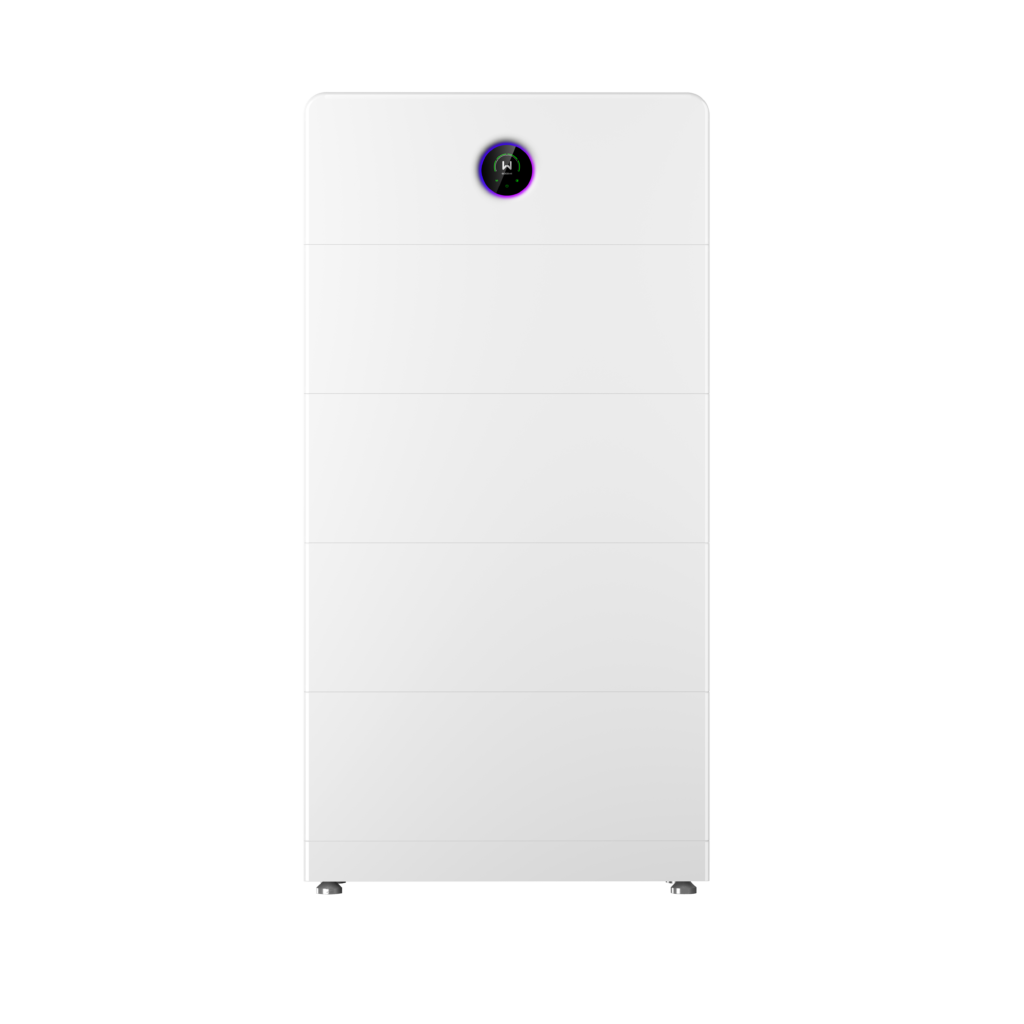
Quick answer: the GoodWe ESA is an all-in-one home battery system: a hybrid inverter that sits on top of a stack of 8 kWh lithium iron phosphate (LFP) battery modules. In Australia it comes as a 9.999 kW single-phase unit and as 9.999 kW and 15 kW three-phase units. The packages we install use two to six modules, or 16 to 48 kWh of usable storage. It is rated IP66 and carries up to 63 A through an internal bypass for whole-home backup.
What is the GoodWe ESA?
Most home batteries are two or three separate boxes: an inverter on the wall, a battery cabinet beside it, and often a separate backup gateway or changeover switch. The ESA folds them together. The inverter is the top module of the stack, the battery modules sit beneath it on a shared base, and the backup switching is built in. GoodWe calls the range its ESA series; the models we install are:
| Model | Supply | AC output | Solar input (max) | Solar inputs (MPPTs) | Backup output |
|---|---|---|---|---|---|
| GW9.999K-EHA-G20 | Single phase | 9.999 kW | 20 kW | 4 | 10 kVA (20 kVA for 10 s) |
| GW9.999K-ETA-G20 | Three phase | 9.999 kW | 20 kW | 4 | 10 kVA (20 kVA for 10 s) |
| GW15K-ETA-G20 | Three phase | 15 kW | 30 kW | 4 | 15 kVA (30 kVA for 10 s) |
The single-phase unit has been on the Clean Energy Council’s approved list since mid-2025. The three-phase units were approved in February 2026, and GoodWe began supplying them in Australia from March.
The battery modules: what 16 to 48 kWh looks like
Each module in our packages is a GW8.3-BAT-D-G21: 8.32 kWh rated, 8.0 kWh usable, using lithium iron phosphate cells. Usable capacity is the figure that matters for your evenings, and it is also the figure the federal battery discount is calculated on.
- Two modules: 16 kWh usable
- Three: 24 kWh
- Four: 32 kWh
- Five: 40 kWh
- Six: 48 kWh, the most we stack in one column
Each module weighs about 79 kg and measures 800 × 326 × 270 mm, so a stack grows upward rather than outward: the footprint stays at 800 mm wide and 270 mm deep whether you have two modules or six. GoodWe rates the modules for at least 8,000 cycles, and the G21 version has an integrated aerosol fire-extinguishing unit. It charges between +2 °C and +55 °C and discharges down to −20 °C.
How many modules you need is a separate question from which brand you choose. Size it on your evening and overnight usage; our battery savings calculator gives a starting point from your bill.
How the ESA handles a blackout
This is the ESA’s strongest feature. GoodWe builds in a 63 A bypass so the whole switchboard can stay on through an outage, without the separate backup gateway many systems need. GoodWe quotes backup switching in under 4 milliseconds, quick enough that most appliances ride straight through.
“Whole-home” has limits. In an outage the house runs on the battery and whatever the panels produce, so the backup output rating matters: 10 kVA continuous on the 9.999 kW units and 15 kVA on the 15 kW unit, with short surges above that. A ducted air conditioner, an oven and a kettle at once can exceed it. We design the backup around the loads you actually want to keep running, and the battery can hold a reserve so there is charge left when the grid goes down.
Solar inputs and oversizing
All three models have four independent solar inputs (MPPTs), so panels on up to four roof faces can each run at their own best point. The single-phase and 9.999 kW three-phase units accept up to 20 kW of solar input, and the 15 kW unit up to 30 kW, which is 200% of the AC rating. With the battery in the system, that lets the array be sized well past the old 133% limit. We explain how in solar panel oversizing explained.
Monitoring and virtual power plants
The ESA connects over Wi-Fi, LAN or Bluetooth, with 4G as an option, and reports to GoodWe’s SEMS+ app. You can see solar, battery, grid and household use in real time and set how the battery charges and discharges.
Every battery that receives the federal discount has to be capable of joining a virtual power plant (VPP). Joining one is optional. In January 2026 GoodWe opened a controlled rollout of Amber’s SmartShift for the single-phase ESA, starting from a waitlist. VPP offers change often, so check the current terms before signing. Our VPP explainer covers what to look for.
Where it can go
The inverter and the modules are rated IP66, the highest dust and water protection you’ll see on a home battery. GoodWe still recommends a sheltered spot out of direct sun and rain, and Australian installation rules keep batteries out of living areas and away from doors, windows and exits. A garage wall, a carport or a sheltered side wall are the usual homes for it. The stack can stand on the floor or fix to the wall, and the inverter module runs from −35 °C to +60 °C, derating above +40 °C.
Who the GoodWe ESA suits
- Homes that want whole-home backup without extra boxes on the wall.
- Larger single-phase homes that need 9.999 kW of inverter and up to 20 kW of solar on four roof faces.
- Three-phase homes that want an all-in-one unit, including the 15 kW model for big arrays and big loads.
- Owners who might add storage later: GoodWe says modules of different ages and capacities can be mixed.
It is less of a fit where there is no sheltered wall or floor space about 800 mm wide, or where a smaller inverter is all the roof can justify. For a modest single-phase array, a 5 kW hybrid with a separate battery can be the better match.
GoodWe ESA packages we install
Every package is the ESA unit plus two to six modules, supplied and installed as one system. Popular starting points are the 9.99 kW single-phase system with 16 kWh, the single-phase system with 32 kWh, the 9.99 kW three-phase system with 32 kWh and the 15 kW three-phase system with 32 kWh. You can compare every size on our solar and battery packages page.
Frequently asked questions
Is the GoodWe ESA a hybrid inverter?
Yes. The top module is a hybrid inverter: it takes solar in, charges and discharges the battery, and supplies the house and the grid. The difference from a standard hybrid is that it shares one enclosure system and base with the battery modules.
How much usable storage does a GoodWe ESA module have?
Each GW8.3-BAT-D-G21 module stores 8.0 kWh usable out of 8.32 kWh rated. Six modules give 48 kWh usable.
Can the GoodWe ESA back up the whole house?
It can carry the whole switchboard through its internal 63 A bypass, within its backup output rating of 10 kVA on the 9.999 kW models and 15 kVA on the 15 kW model. Very large simultaneous loads may need to be managed.
Can the GoodWe ESA be installed outside?
It is rated IP66 for dust and water, and GoodWe recommends a sheltered position out of direct sun and rain. Australian rules also control how close it can be to doors, windows and living areas.
What warranty does the GoodWe ESA have in Australia?
GoodWe gives 10 years on the ESA unit and the battery modules, with the battery guaranteed to keep at least 70% of its usable energy over that time or until a set energy throughput, whichever comes first.
More on the GoodWe ESA: the three-phase models · the 8.3 kWh battery module · backup in a blackout · installation and space · all-in-one or separate inverter and battery
Sources: GoodWe ESA single-phase and battery module datasheet (AU) · GoodWe ESA three-phase datasheet (AU) · GoodWe — CEC approval for the three-phase ESA · GoodWe — the ESA arrives in Australia · GoodWe limited warranty for the ESA (AU/NZ) · GoodWe — Amber SmartShift · Clean Energy Council — approved batteries
Every figure on this page is checked against its primary source before publication. If a datasheet, warranty or program changes, this page is updated and the verification date above moves with it.
See which ESA size fits your home
Build Your System asks about your usage, your roof, your phase and your backup needs, then recommends a system sized to the answers, with indicative pricing.